Voters Weigh Iran War and High Prices in Midterm Battle
As polls open on Election Day, candidates on both sides are arguing over the cost of the conflict with Iran and its impact on the American economy.
By Hugo Cook ·

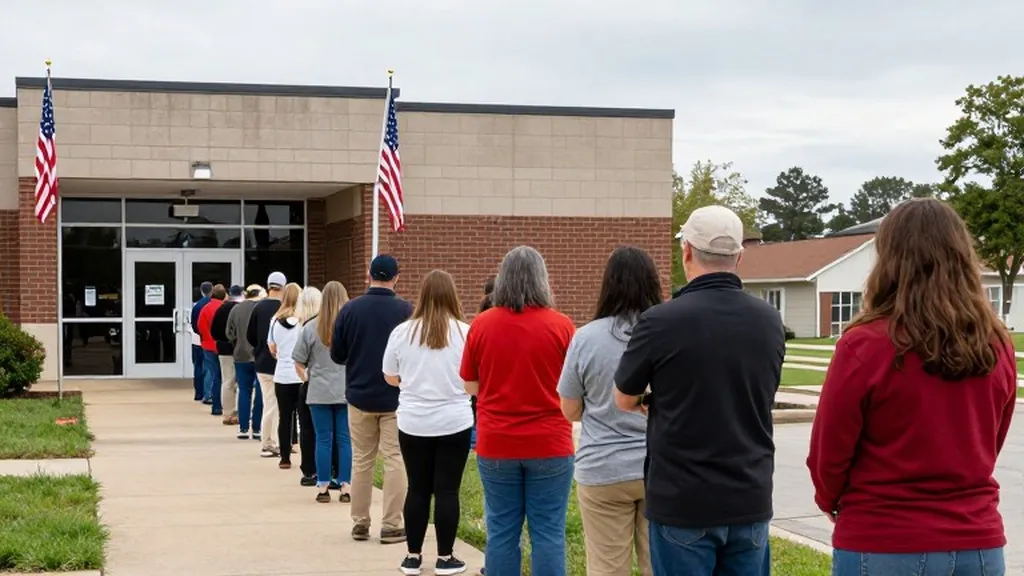
Election Day has arrived with voters across the nation grappling with the implications of the ongoing war with Iran. The Associated Press describes the day as a referendum on President Donald Trump's second term, noting that many citizens are struggling with high prices and are angry over the unpopular conflict. This sentiment is driving the midterm election, which will determine who controls Congress for the president's final two years.
The war has become a central issue in a race that is closely contested. Republican leaders are bracing for the possibility of losing the House while fighting to hold the Senate. Democrats, meanwhile, are described as cautiously optimistic. The AP notes that one or two seats in either chamber could tip the balance of power, making every vote in the battleground districts crucial. The outcome will likely shape the legislative agenda for the next two years, including oversight investigations and budget negotiations.
In the Senate, thirteen races are rated as battlegrounds by major election trackers. These include contests in states such as Maine, Iowa, Kansas, and Georgia. In Maine, Senator Susan Collins is facing a strong challenge from Democratic former state Senate President Troy Jackson. The AP reports that economic strain and tariffs have made the state competitive, with voters directly weighing the costs of the current administration's policies. In Kansas, a traditionally Republican state, the race has become central to the fight for Senate control, drawing significant attention from both parties.
Democratic leaders are emphasizing the financial burden on families. DCCC Chair Rep. Suzan DelBene stated that the American people are angry and want change. This message resonates with voters like James Moore, a librarian in Raleigh, North Carolina, who told reporters he is paying more in taxes, healthcare, and for everything else. The AP-NORC poll shows that 25% of U.S. adults approve of the president's handling of the economy, with most blaming him for high prices. This economic anxiety is a primary driver of voter turnout and dissatisfaction.
Republican leaders are focusing on turnout and the president's overall performance. RNC Chairman Joe Gruters said that everything depends on turnout and that if they turn out their voters, they win. The president held dozens of rallies in the final days before the election, ending his schedule in Salina, Kansas. There, he urged voters to pretend he was on the ballot, a strategy designed to rally his base. Voter Mark Barker of Palm Beach Gardens, Florida, echoed this support, saying he has been following the president and thinks he is doing an awesome job.
The war with Iran has also influenced campaign spending and advertising strategies. The 2026 elections are expected to be the most expensive in history. An AP analysis of AdImpact data shows that 88.1% of Republican general election TV ad spending went to states and districts that Trump won in 2024. This includes more than $850 million in states where he won by 10 points or more. Democrats, however, outraised their opponents at the candidate level, focusing their resources on key Senate and House races where the war and its economic effects are prominent topics.
The conflict has also added a layer of complexity to the election administration. The Trump administration filed lawsuits in Alaska and California related to voting certification and noncitizen voting. A federal judge temporarily barred the administration from carrying out a plan to prevent noncitizen voting, a move that critics say risks disenfranchising eligible voters. These legal battles have raised concerns among Democrats about interference and intimidation, with the Justice Department threatening to prosecute local election officials in some areas.
Governor races are also being affected by the national mood. Democrats are defending five governorships in states that Trump won in 2024, including Arizona, Kansas, Michigan, Pennsylvania, and Wisconsin. In Georgia, the race between Republican Rick Jackson and Democrat Keisha Lance Bottoms is drawing attention as a potential bellwether. The AP calls Texas, Florida, and Iowa competitive governor races. If Democrats gain a net two governorships, they would hold a nationwide majority for the first time since 2010, a significant strategic victory that would bolster their legislative influence.
The early vote has already surpassed the totals from four years ago in many closely watched states, with more than 57 million people having cast ballots by Monday. This high turnout suggests that voters are engaged with the issues at hand, including the war with Iran and the cost of living. Wall Street is also watching the results, with Reuters noting that the outcome could add to investor concerns about AI spending and debt ceiling negotiations. The election will set the tone for the final two years of Trump's term, with a strong Democratic night potentially boosting 2028 candidates and complicating the path for Vice President JD Vance.
As polls close, the focus remains on the battleground districts where the war with Iran is a key talking point. In North Carolina, former Governor Roy Cooper is facing Michael Whatley in a race that has been shaped by the retirement of Senator Thom Tillis after clashing with the president. In Ohio, former Senator Sherrod Brown is challenging Senator Jon Husted in a special election. These races, along with others in Michigan and New Hampshire, will determine the final balance of power in the Senate. The results will provide a clear mandate on how voters feel about the current direction of the country, particularly regarding the Iran conflict and its economic fallout.
The election will also decide the composition of the House, where all 435 seats are up for grabs. Democrats need a net gain of three districts to take control, while Republicans can lose no more than two. The new congressional maps in states like California, Florida, and Texas may play a role in these outcomes. As voters head to the polls, they are making choices that will shape the legislative agenda for the next two years, with the war with Iran remaining a central and contentious issue in their deliberations.