Stakes of 2026 Midterms: Control of Congress and the Path to 2028
With polls open, the outcome of Tuesday's election will determine the balance of power in Washington for the final two years of the Trump administration.
By Hugo Cook ·
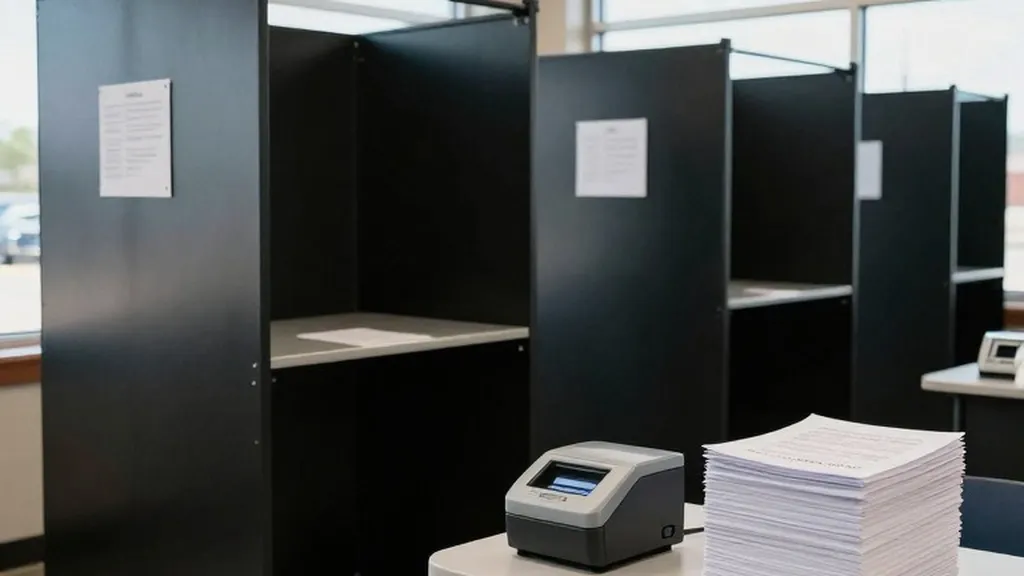
Voters across the United States are heading to the polls on Tuesday, November 3, 2026, to decide the composition of the federal government for the final two years of President Donald Trump's second term. The Associated Press describes the election as a referendum on the administration's performance, with many citizens expressing frustration over high prices and an unpopular war with Iran. According to AP-NORC polling, 35 percent of U.S. adults approve of the president's job performance, while about seven in ten say the country is heading in the wrong direction. The results of this midterm election will determine which party holds the majority in the House and Senate, a decision that carries significant implications for legislative priorities and oversight.
In the House of Representatives, all 435 seats are up for election. Republicans currently hold 218 seats, while Democrats hold 214, with one independent and a few vacancies. Democrats need a net gain of three districts to secure a majority, whereas Republicans can afford to lose no more than two seats. Ballotpedia identifies 46 battleground districts, split between 25 currently held by Democrats and 21 by Republicans. A notable dynamic involves 21 Democratic-held districts that voted for Trump in 2024, contrasting with nine Republican-held districts that voted for Kamala Harris. This split ticket history suggests that partisan loyalty in these areas may be fluid, making the outcome of these specific races critical to the overall chamber balance.
The Senate race involves 35 of the 100 seats, including 33 regular elections and two special elections for the remaining terms of Marco Rubio in Florida and JD Vance in Ohio. Republicans hold 53 seats, Democrats hold 45, and two independents caucus with the Democrats. Democrats require a net gain of four seats to take control of the chamber, while Republicans can lose only two. Eleven senators are not running for re-election, including four Democrats and seven Republicans. The Associated Press notes that one or two seats could tip the balance of the Senate, making races in states like Iowa, Kansas, and Maine particularly pivotal. In Iowa, the seat is open after Joni Ernst announced her retirement, and the race is rated as a toss-up or leaning Republican by various analysts.
Control of the House and Senate will dictate the pace and nature of investigations into the executive branch. If Democrats win even one chamber, investigations and possible impeachment proceedings become likely. House Democratic Leader Hakeem Jeffries has outlined a 100-day agenda focused on the cost of living and oversight, and he would become the first Black speaker of the House if his party gains control. Conversely, a Republican hold would likely stall major legislative initiatives and focus on defending the administration's agenda. The Associated Press reports that Republicans are bracing for potential losses in the House while fighting to maintain their Senate majority, with many candidates keeping a visible distance from the president to appeal to independent voters.
The outcome of the election will also influence the field of potential candidates for the 2028 presidential election. A strong Democratic night would boost the prospects of current governors and high-profile figures such as Gavin Newsom, JB Pritzker, and Pete Buttigieg. For Republicans, a defeat could complicate the path for Vice President JD Vance, who is seen as a leading contender for the party's nomination. The Associated Press notes that the midterm pattern, where a president's party almost always loses seats, is a historical trend that Republicans have tried to counter with new redistricting maps. However, the effectiveness of these new districts in states like Florida and Ohio remains a subject of debate among political analysts.
Election administration has been a point of contention leading up to Tuesday. A federal judge temporarily barred the Trump administration from carrying out a plan to prevent noncitizen voting, a move critics say risks disenfranchising eligible voters. Additionally, a judge ordered the administration to stop demanding that California election officials segregate ballots cast by people on lists of suspected noncitizens. The U.S. Postal Service has added staff and hours to ensure mail ballots are counted on time, reflecting the high volume of early voting. More than 57 million people had already voted as of Monday, surpassing early vote totals from four years ago in many closely watched states.
Money has played a significant role in shaping the campaign landscape. The 2026 elections are expected to be the most expensive in history. Republican committees outraised and outspent their Democratic counterparts, aided by Trump-affiliated groups and Elon Musk. However, at the candidate level, Democrats outraised their opponents. An analysis by the Associated Press of AdImpact data shows that 88.1 percent of Republican general election TV ad spending went to states and districts Trump won in 2024. This targeted spending strategy reflects the party's focus on consolidating its base in areas where it has a historical advantage, even as it faces challenges in competitive districts.
Governor races are also a key component of the midterms, with 36 governorships on the ballot. Democrats hope to hold a majority of governorships for the first time in two decades, a status Republicans have held since 2010. Ballotpedia identifies several competitive governor races, including in Georgia, Nevada, and Ohio. In Georgia, Republican health care executive Rick Jackson faces Democratic former Atlanta Mayor Keisha Lance Bottoms. In Ohio, Republican Vivek Ramaswamy runs against Democrat Amy Acton, a race that has drawn attention due to campaign ads and local issues. The control of statehouses will influence state-level policies and the implementation of federal mandates in the coming years.