
SpaceX Declines Military Work as Europe and Canada Race to Build New Rockets
While SpaceX turns down three government contracts, a Spanish startup and a Canadian firm push forward with their own launch vehicles.
By Madison Morris ·
The commercial space industry is currently at a crossroads, with major players making decisive moves that will shape the next decade of access to orbit.
This week brought significant updates from three different corners of the global launch market. In the United States, SpaceX made a surprising decision to pass on new government work. Across the Atlantic, a Spanish company is finalizing the assembly of its first rocket. Meanwhile, in Canada, a startup is seeking substantial funding to expand its workforce and build two new types of launch vehicles. These developments highlight how the race to reach space is becoming more competitive and diverse.
The most striking news came from SpaceX, which told the US Space Force that it was not interested in three offered military launch contracts. The company effectively said thanks, but no thanks, to the government offer. This decision is notable because it shows SpaceX is selective about its commercial and government portfolio, even as it continues to dominate the heavy-lift market. It signals a strategic choice to perhaps focus its resources elsewhere rather than taking on additional military missions at this time.
On the civil space side, the conversation is about complexity and safety. A NASA safety panel indicated that SpaceX’s Starship vehicle might require up to 22 refueling stops in orbit to support a lunar landing mission. This number is a critical data point for engineers and planners. It underscores the massive logistical challenge of sending humans to the moon using current technology. Each refueling event adds risk and cost, making the number of stops a key factor in the feasibility of lunar missions.
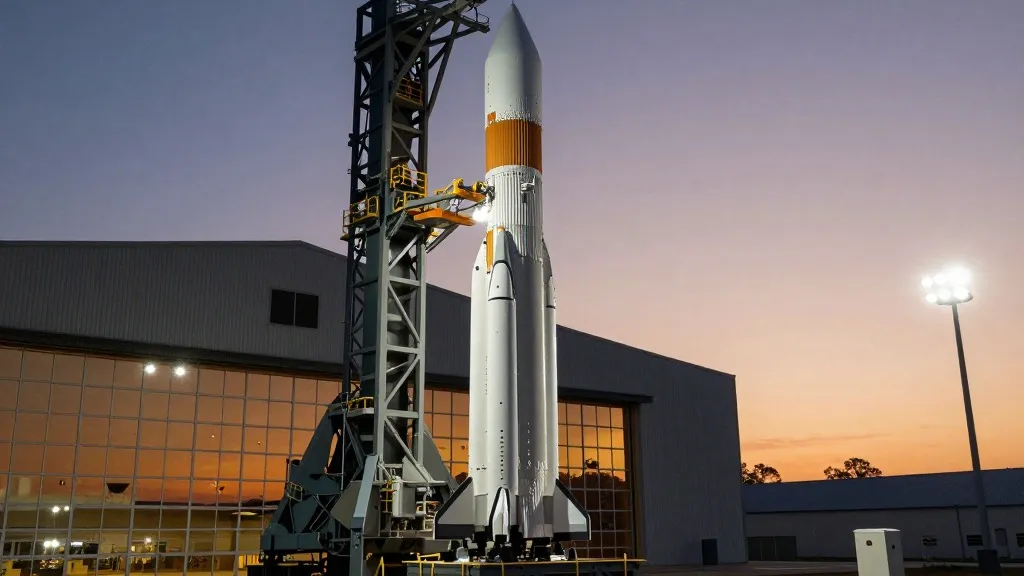
In Spain, PLD Space is moving closer to its first flight with the Miura 5 rocket. The company reports that the vehicle is nearing final integration. This rocket is designed as a small-lift vehicle, meaning it can carry smaller payloads to orbit. PLD Space has already manufactured three of these rockets. The first one is intended for the inaugural launch, while the other two are being used to test and qualify key system elements. This approach allows the team to learn from each test before the final flight.
Raúl Torres, the CEO of PLD Space, provided details on the progress during a program update on October 19. He explained that building three vehicles allowed their teams to work continuously across different production stages. This method lets them apply lessons learned from each qualification campaign directly to the final launch vehicle. One second stage is now fully integrated and is undergoing system-level testing. It is currently at the company’s Teruel test facility for a qualification campaign. This includes a wet dress rehearsal and a static hot-fire test, which are critical steps to ensure the rocket works correctly under real-world conditions.
The company now targets a first flight of the Miura 5 before mid-2027. This timeline is ambitious for a small-lift vehicle from a newer company. Success would position PLD Space as a key player in European launch services. The ability to launch small payloads efficiently is in high demand from universities, research agencies, and small satellite operators. If the Miura 5 flies successfully, it could change the landscape for small satellite deployment in Europe.
Across the Atlantic, Reaction Dynamics is looking to raise $350 million to grow its team and build its rockets. The Canadian startup is one of three prominent launch companies in its country. It is developing the Aurora rocket, which is a small-lift vehicle expected to reach orbit in 2028. The company also has plans for a larger rocket called Borealis, which is a medium-lift vehicle targeted for its debut by 2031. The funding will be used to expand the staff from 68 to more than 350 people.
This expansion is crucial for meeting the development timelines for both the Aurora and Borealis rockets. Building rockets is a complex and labor-intensive process that requires a large team of engineers, technicians, and support staff. By securing this funding, Reaction Dynamics aims to accelerate its progress and establish itself as a reliable launch provider. The dual focus on both small and medium-lift vehicles allows the company to serve a wider range of customers and market segments.
These three stories illustrate the different paths companies are taking in the space industry. SpaceX is curating its workload, PLD Space is finalizing its hardware for flight, and Reaction Dynamics is scaling up its operations. Together, they show that the market for launching rockets is expanding and becoming more specialized. For readers in New York and New Jersey, these developments matter because they affect the cost and availability of satellite services, which underpin everything from weather forecasting to internet connectivity. As these new rockets approach their launch windows, the industry will be watching closely to see which companies succeed in bringing their visions to life.
Source: Ars Technica · original report published