Orbit Dependency: Starlink speed cuts blind Ukrainian defenses
Two soldiers died and 17 were injured after Starshield throttled fast-moving interceptors, sparking debate over SpaceX's control of launch infrastructure.
By Hugo Cook ·
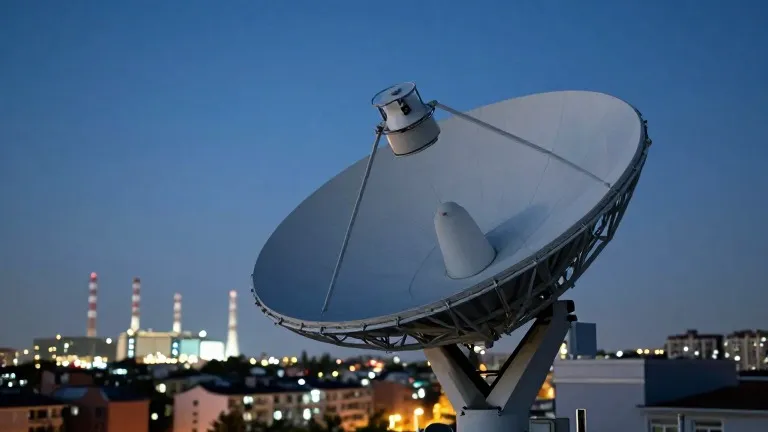
Access to the Starshield satellite network was restored in Ukraine this week after a brief cutoff that left high-speed military drones unable to track targets. The service interruption lasted for part of last week. During that time, Ukrainian interceptors used to counter Russian bomb-carrying drones failed at high speeds. This technical limitation made it easier for Russian forces to strike energy infrastructure on the ground. Reports indicate two Ukrainian soldiers were killed and at least 17 others injured as a result of the defense failure.
The Ukrainian military stated it received no advance notice of the speed restrictions. President Volodymyr Zelenskyy framed the event as a direct communication from the United States. He cited growing tensions between his administration and President Donald Trump as context for the move. The sudden loss of service drew widespread public criticism. Critics directed their anger at both Trump, for perceived abandonment of Ukraine, and SpaceX CEO Elon Musk, for facilitating the change.
Accounts of how the decision was made have changed since the incident began. Musk initially claimed SpaceX does not control Starshield, asserting that the U.S. military makes such calls. The White House later denied taking direct action. Subsequent reports indicated that Musk proposed the slowdown to Trump, who accepted it. Other accounts suggest Musk ordered the restrictions himself. Regardless of the chain of command, the technical link was restored, allowing Ukrainian drones to function normally again.
Ukraine relies heavily on U.S. technology for its defense, including previous limitations on Starlink coverage during the 2022 counterattack in Crimea. Experts point to this episode as evidence of the geopolitical power held by a single unelected executive. This influence stems from the concentration of the space industry within one company. Wendy Whitman Cobb of the Maxwell Air Force Base noted that SpaceX holds a practical monopoly on launch. She observed that rivals like United Launch Alliance, Blue Origin, and Rocket Lab exist but do not match SpaceX in frequency, mass, scale, or cost.
SpaceX has deployed over 10,000 Starlink satellites in low Earth orbit using Falcon 9 rockets. Andrew Reddie of the University of California, Berkeley, described the situation as an antitrust concern. He noted that SpaceX launches primarily support its own constellations, reducing the incentive to launch competitors. While SpaceX has launched some Amazon Kuiper satellites, experts report that Falcon 9 prices for low Earth orbit and Starlink service prices have risen since 2020. Space economist Oğuz Karasu added that launch represents only 8% of the space industry, yet the rest of the sector cannot function without it.
The stakes extend to daily life through GPS and satellite communications. Whitman Cobb warned that a GPS outage could disrupt fuel pumps, ATMs, financial transactions, and ambulance dispatch. The U.S. Space Force faces specific risks as SpaceX reportedly plans to retire the Falcon 9 rocket and stop accepting new missions starting in 2028. This timeline leaves the military searching for launch options for new satellites. NASA also relies on SpaceX for the Crew Dragon capsule, adding uncertainty to its crewed missions.
Reddie highlighted that a non-state actor is making decisions akin to government actions. This dynamic directly affected Ukraine's defensive capabilities. Michele Scataglini of the Oxford Space Initiative called the incident a global wake-up call. She warned that a single firm could determine which countries access space, particularly in the Global South. Whitman Cobb expressed cautious optimism that the deaths would raise awareness of the risks of relying on a single company, noting that it took human lives for the problem to be widely recognized.
Source: The Verge