UK households build three-day food reserves
Official guidance on Thursday prompted many families to buy extra water and non-perishables, citing security and climate risks.
By Maya Almasi ·
The UK government launched a national campaign on Thursday urging residents to store three days' worth of emergency supplies. The directive asks households to stockpile enough food, water, and essential equipment to survive without external support for 72 hours. This move follows months of ministerial signals warning about state-sponsored threats and climate instability.
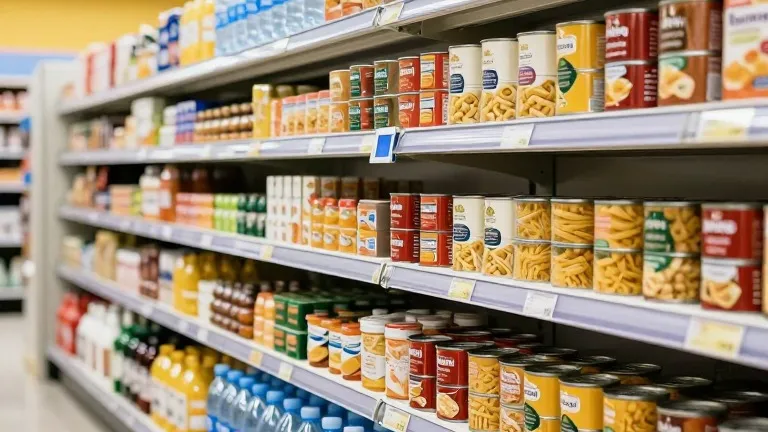
Specific items listed in the guidance include dried foods, bottled water, medicines, and backup power sources. Officials aim for this stock to cover a wide range of potential disruptions, from infrastructure failures to security incidents. The campaign marks a formal push for household resilience that had previously relied on informal advice.
Lawrence Barratt from Hythe in Hampshire began purchasing these items about two weeks ago. He adds tinned beans, soups, noodles, and rice to his weekly shopping list. His goal is to maintain a three-day supply for two people. He is also acquiring a first aid kit, a battery-powered radio, a torch, and a portable power bank.
Barratt said the government's online advice made him realize he would be unprepared for any major disruption. He also recalled empty shelves during the first lockdown in 2020. His power bank, originally for camping, is expected to charge phones, run a television, and power a small fan heater.
In Greenwich, London, Marco Camurri has been preparing for several months. His family stores pasta, passata, stock cubes, tinned food, bottled water, medicines, and toilet paper. Camurri noted that his relatives in continental Europe provide a potential escape route if the UK enters a conflict or faces severe infrastructure failure. He keeps wood in his garden to boil water and maintains his car fuel tank above 50 percent, which allows for about 300 miles of driving.
Camurri described his preparations as similar to keeping one extra week's worth of staples, which his family consumes and replaces. The household is now tracking the expiry dates of their stock in a spreadsheet to ensure items are used before they spoil. They began this process after reports of supply chain disruptions linked to El Niño emerged.
Jack Davenport from North Shields on the River Tyne also cited El Niño as a catalyst for his stockpiling. He pointed to climate disasters, Russian shadow threats, and energy insecurity as key concerns. Davenport described the country's infrastructure as creaking and outdated, suggesting the government wants to reduce long-term panic by framing these threats as manageable possibilities.
Deirdre O'Sullivan from Leicester disagrees with the approach. She called the guidance daft and compared it to 1970s advice to hide under a table during nuclear attacks. She argued that the three-day timeframe is inadequate for a genuine emergency, stating that water dangers require more precise anticipation and that extreme food shortages would likely unfold over a longer period.
Source: The Guardian