9,000 Hectares of Poppies Map to Balochistan After Afghan Ban
Satellite data from Alcis identifies thousands of hectares of new crops in Pakistan, with Afghan farmers leasing land to expand production.
By Madison Morris ·
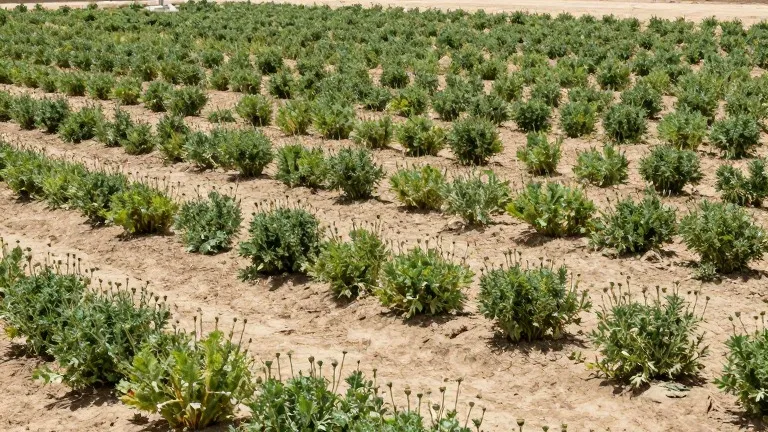
Satellite imagery has identified more than 9,000 hectares of poppy cultivation in Pakistan's Balochistan province. The data, compiled by the British firm Alcis, reveals a sharp increase in agricultural activity along the border with Afghanistan. This expansion follows the Taliban's 2022 ban on illicit narcotics in Afghanistan, which caused the country's opium output to fall.
David Mansfield, a UK-based expert on Afghanistan's illicit drugs industry, stated that the ban and instability have created conditions for widespread cultivation in Pakistan and Iran. He described the remote borderlands of the three countries as a new global center for opium production. Mansfield, who authored an August report for Alcis, noted that most of the Pakistani crops are concentrated in the districts of Loralai and Killa Abdullah.
Afghan farmers from Kandahar and Helmand provinces are driving the surge in Pakistan. These growers are leasing land in Balochistan, bringing capital and agricultural knowledge to the region. Lala Jan Kakar, a resident of Killa Abdullah, said the Afghan farmers invest millions of rupees in solar-powered wells. They share profits with local landowners, who face less risk than in their traditional fruit farming.
Local officials and residents describe a complex dynamic of cultivation and enforcement. Abdul Qahar Wadan, a former National Assembly member, claimed that senior military officials and power brokers support the crops and take commissions. Monawar Hussain, the district chief administrative officer, rejected this claim, arguing that cultivation declined after an eradication campaign. However, Alcis imagery from 2026 shows no clear evidence of such eradication.
Farmers in the region report that poppies offer higher income and demand than fruit. One anonymous grower in Killa Abdullah said bribes are paid to local authorities through intermediaries. He alleged that growers sometimes plant on barren land so officials can destroy the crop and publicize the effort. Kakar said insecurity, drought, and flash floods have devastated traditional agriculture, making poppies a necessary alternative.
The pattern mirrors developments in Iran, where Afghan farmers also work as tenants. In Iran's Sistan-Baluchistan province, satellite images show extensive fields using drip irrigation. This costly method suggests growers expected little risk of eradication in 2026. Iranian authorities have been unable to destroy the crop due to the war against the United States and Israel, which began in late February.
Experts expect cultivation to rise further in 2027 as economic pressures mount. Mansfield noted that many farmers doubled their cultivated land in 2026, a sign of higher production ahead. The shift represents a move from mixed farming to large-scale poppy monoculture, with potential impacts on international heroin supplies and regional violence.
Source: RFE/RL