Qatar forges five-year plan to shield its skies from US dependence
A new five-year strategy aims to reduce reliance on US forces while building integrated air, naval, and cyber defenses to protect the small Gulf state.
By Hugo Cook ·
Qatar is preparing a five-year national defense strategy designed to lessen its dependence on United States military support by 2031. The plan seeks to establish what officials describe as defense autonomy, allowing the small Gulf state to protect its vital interests without requiring immediate external intervention in a crisis.
The strategy responds to recent security developments in the region that have tested the reliability of current alliances. While Qatar hosts a major US military base and benefits from strong international relationships, its geographic size and population limit its ability to sustain independent operations against major threats. The new approach aims to ensure the state can withstand attacks and maintain continuity of government and economic functions even if partner nations provide limited assistance.
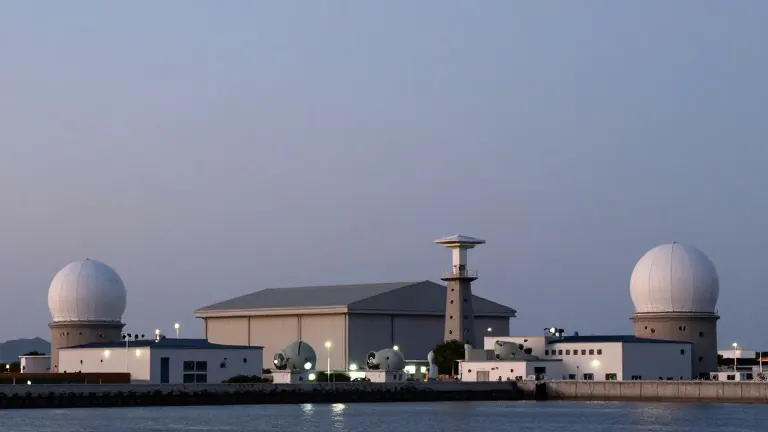
The plan rests on six pillars: air and missile defense, early warning capabilities, protection of critical infrastructure, air and naval power, cybersecurity, and the restructuring of security policy around multiple guarantees. A central objective is the creation of an integrated national air defense shield. This system will combine multilayered radar networks, civilian and military systems, and a unified command center. The goal is not to possess the most advanced equipment, but to maintain a functional defense grid that operates independently if US forces are absent.
Qatar’s air force will also undergo significant changes to ensure operational sustainability. The focus shifts from the quantity of aircraft to the capacity to sustain operations for several weeks without external supply lines. Priorities include increasing domestic ammunition production, expanding maintenance capabilities, and dispersing stockpiles to prevent total loss in a single strike. The military will also develop ground and aerial refueling capabilities to extend the range and endurance of its fleet.
Maritime security forms a critical part of the strategy, given that Qatar’s economy relies heavily on the export of liquefied natural gas and oil. The state plans to develop a naval force capable of making attacks on its maritime infrastructure difficult and costly. This involves expanding surveillance capabilities, countering maritime drones, and securing shipping routes. The aim is to protect the economic lifeline that supports the nation’s financial stability.
The strategy also includes a national resilience program to protect critical infrastructure. This initiative targets gas facilities, desalination plants, power stations, telecommunications networks, and hospitals. Each sector is required to establish backup capacity to prevent a localized failure from escalating into a national crisis. For example, alternative water sources must be available if a major desalination plant goes offline.
To support these physical defenses, Qatar is developing independent intelligence capabilities. The state is investing in space-based reconnaissance, unmanned aerial vehicles, radar systems, and artificial intelligence-driven data analysis. This integrated system will allow Doha to assess threats before relying on intelligence from partners such as the US, France, or the United Kingdom. The objective is to retain the initiative in threat detection and response.
Finally, the plan calls for a diversification of security guarantees. Rather than relying solely on Washington, Qatar intends to strengthen partnerships with South Korea, Turkey, and specific European and regional powers. This approach aims to reduce the risks associated with single-ally dependence without abandoning cooperation with the US. The strategy concludes that by 2031, Qatar must possess the national capabilities to ensure its protection under all circumstances.
Source: Al Jazeera