
Portland Schools: Maine’s First District-Wide Black Studies Curriculum Launches
The Portland school district introduced a new African American studies program focused on local history, expanding from sixth grade through high school this academic year.
By Madison Morris ·
Portland schools introduced Maine's first district-wide Black studies curriculum this school year, centering instruction on the specific history of the state's largest city rather than national narratives alone. The new program is currently being implemented for students in sixth grade and above, with plans to extend the coursework to younger elementary students in the coming year. This rollout follows a six-year development process initiated by district officials in response to a gap in available teaching materials.
Fiona Hopper, the district’s social studies special projects coordinator, stated that the initiative was driven by the 2020 Black Lives Matter movement. She noted that while classroom resources existed for national and international history, few addressed local New England history. This led the district to spend several years identifying the specific stories and individuals central to Portland’s past. A group of advisors, including educators, historians, and community members, helped design the lesson plans for different grade levels.
The curriculum covers a wide range of topics, from African civilizations to the Abolition and Reconstruction eras. Specific lessons examine the impact of the Underground Railroad and the Fugitive Slave Act on the city. The program also addresses the expulsion of the multiracial community on Malaga Island near Phippsburg and the legacy of slavery in the region. Hopper emphasized that the abolitionist movement in the area was largely led by local African American residents.
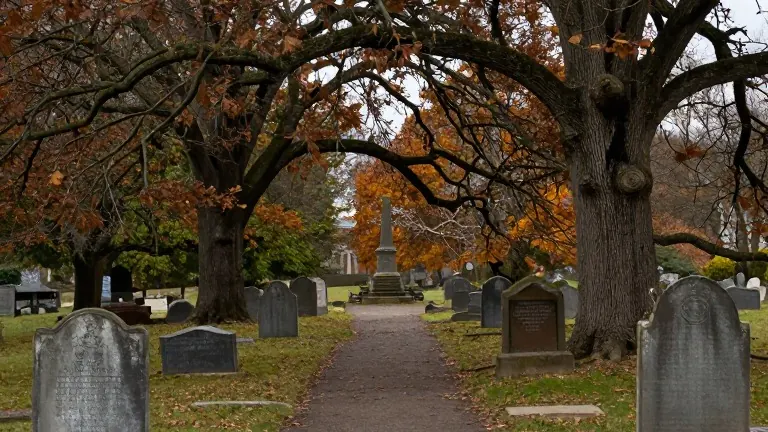
Students in seventh grade recently completed a unit on local history. The lessons included a field trip to the city's Eastern Cemetery, the oldest cemetery in Portland. There, journalist and historian Bob Greene explained the symbolism of a Freedom Trail plaque. Greene, who served as an advisor on the curriculum, traced his own family lineage in Cumberland County back to 1783. He noted that many of his ancestors are buried in the cemetery, a physical record of the community's long presence in the city.
"That's what people should understand: that we're not newcomers. We've been here," Greene said. "We helped build this. Everybody helped build." The visit to the cemetery was part of a weeklong unit that included a visit to the Indigo Arts Alliance studio last month. There, journalist and musician Samuel James presented a history lesson to the seventh graders.
James used a banjo to illustrate the cultural heritage of enslaved Africans. He explained that the instrument, created by enslaved people, has shaped American music for centuries. He framed the history lesson around two concepts: what people brought with them and how they utilized what they found in America. The students then followed the city's Freedom Trail, which marks sites associated with the Underground Railroad and other key moments in Black history.
Hamza Isaak, a seventh grader whose family is from Somalia, participated in the unit. He said the curriculum resonated personally because it connected his own ancestry to the broader struggle of Black people in America. "It feels good because I'm learning about my ancestors, and I'm learning like how Black people had a struggle," Isaak said. He added that the lessons provided a perspective on what life might have been like for his ancestors during that historical period.
The district aims to expand the curriculum to kindergarten through fifth grade next year. The program represents a structural shift in how social studies is taught in Portland, moving away from generalized historical overviews toward a localized approach. Hopper said the goal was to ensure students understand the specific people and events that shaped their immediate environment. The curriculum remains focused on providing students with a detailed understanding of the city's historical foundation.
Source: WEVO