Mental health team spent 12 months tracking missing Bronx patient
A Westchester County worker describes the routine of searching for a participant on Dyre Avenue to secure overdue psychiatric injections.
By Maya Almasi ·
A Westchester County mental health worker spent 12 months searching for a specific participant in the Bronx before the search concluded without a final resolution. The effort required the team to maintain contact with the individual, who lived within the county's large service area but was frequently difficult to locate.
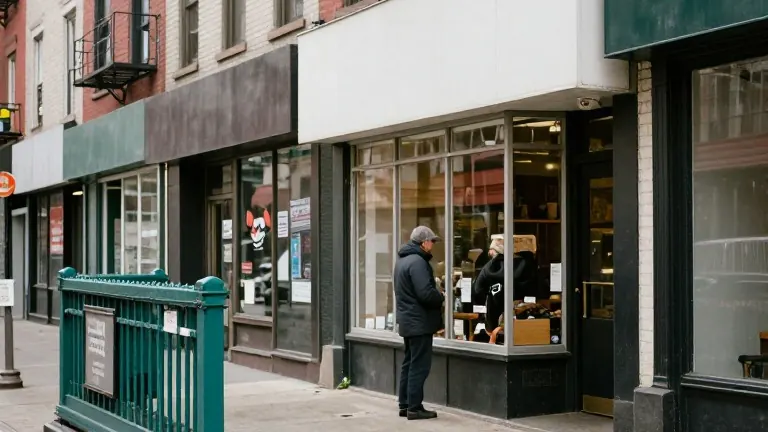
The primary location for these searches was the block between Light Street and Dark Street in the Bronx. This area sits south of the New York City line, which runs transversely to Dyre Avenue. The block features a shopping district adjacent to a subway and elevated train station. The worker assigned to the case would often watch crowds of passengers exiting the station to identify the participant.
The worker's duties involved two distinct tasks. In some instances, the goal was simply to maintain engagement with the individual. In other, more urgent cases, the worker had to spot the participant and alert the team's psychiatrist. The psychiatrist would then drive from a distant location to the Bronx to persuade the patient to receive an anti-psychotic injection.
The worker noted that the difficulty of securing the medication increased as the shot became more overdue. Until the psychiatrist arrived, the worker had to remain in the participant's company. This required constant presence in the local area, often involving walking both sides of the street and looking into store windows.
The ACT team served all of Westchester County, a region the worker described as too large for their staffing levels. Severe periods of understaffing limited the team's ability to travel. Only one or two participants lived in northern Westchester, and those individuals were contacted mainly by phone. The team could meet those patients in person only once or twice a month.
One shop owner on Dyre Avenue became a key resource for the worker. An immigrant from the Middle East, the owner was described as generous and kind. He frequently allowed the participant to charge their phone in his store. The worker would regularly enter the shop to ask if the participant had been seen. The owner often provided updates on when the patient had last visited.
The search ended after the participant evaded the team for a final period. The worker was later near Dyre Avenue and attempted to visit the shop owner to say hello. After walking back and forth on the block several times, the worker could not locate the specific store. The shop owner had evidently moved to a different neighborhood.
Source: Yonkers Times