Jewish theology: Elevating the physical world through daily action
The rabbi of the Western Wall argues that the Cave of the Patriarchs symbolizes the union of the spiritual and the material, a concept rooted in the story of Abraham.
By Madison Morris ·
The rabbi of the Western Wall and holy sites asserts that the primary purpose of Jewish life is to merge the spiritual with the physical. In a piece published on October 30, the rabbi explains that when the body serves as a vehicle for spiritual obligations, the material world becomes sanctified.
This mission relies on a concept articulated by the Kotzker Rebbe. He cited Psalm 115:16, which states that the heavens belong to God while the earth was given to mankind. The interpretation offered is that humanity must transform the earth into heaven.
The article identifies Abraham as the historical model for this integration. The founding Patriarch is described as someone who embodied the connection between spiritual values and material realities. His life demonstrates that the two realms are not disconnected worlds but complementary dimensions of a single reality.
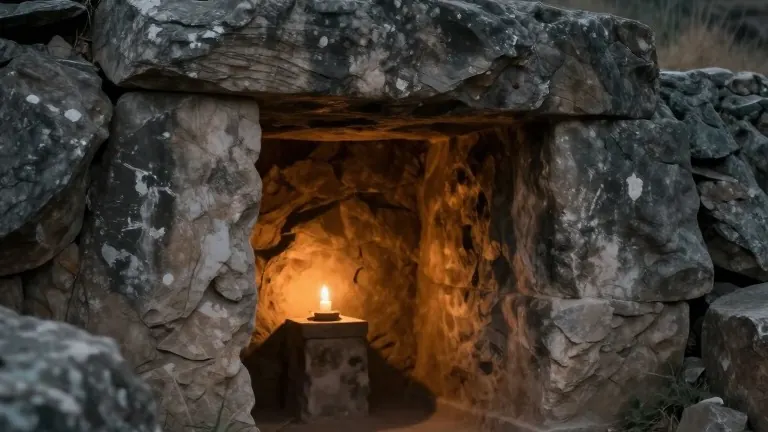
A central narrative in the text concerns the Cave of Machpela in Hebron. Midrashic sources describe a scene where a young calf ran ahead of Abraham all the way to Hebron. The calf entered the Cave of Machpela, leading Abraham to a site where Adam and Eve lay buried with candles burning before them.
Abraham recognized the cave as suitable for burial and acquired it at great expense from the Hittites. The Zohar adds that the cave serves as the entrance to the Garden of Eden. After his expulsion, Adam smelled the fragrance of the Garden near the cave and requested to be buried there with Eve.
The name Machpela derives from a root meaning duality. Commentators explain this term because the cave became the burial site for several couples, including Adam and Eve, Abraham and Sarah, Isaac and Rebecca, and Jacob and Leah. This physical pairing reflects the theological idea that the spiritual and material exist side by side.
The location of the cave in Hebron is noted for its Hebrew name, which is associated with connection. The rabbi argues that the site symbolizes the mission passed down from the Patriarchs and Matriarchs. This mission involves bringing spirituality into physical lives and making faith tangible through specific actions.
The article details the episode of Abraham’s hospitality to three men. When he saw them, he immediately began preparing a meal. The sages teach that these acts had a spiritual effect that extended beyond the immediate moment. The Midrash links Abraham’s instruction to Sarah to knead and make cakes to the later descent of manna in the wilderness.
According to the Exodus Rabbah, the manna first descended in Alush due to the merit of Abraham’s words. This reward suggests that ordinary human acts can draw heavenly blessing into the world. The preparation of food for guests is presented as a method to elevate the material and give it spiritual significance.
Source: The Jerusalem Post