Biblical Exegesis: Medieval Commentators on Sarah's Laughter
Ramban and the Ishbitzer Rebbe offer distinct theological interpretations of why Sarah laughed at the prophecy of Isaac's birth, linking her reaction to the breakdown of natural limits.
By Hugo Cook ·
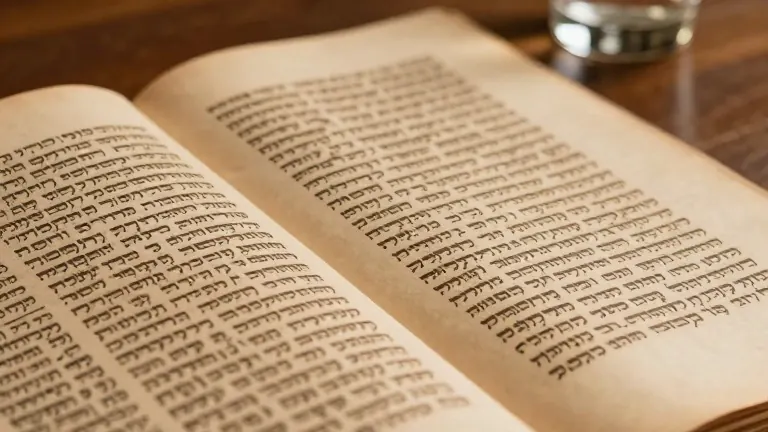
The Torah recounts that Abraham and Sarah both laughed upon hearing the prophecy of Isaac's birth, yet only Sarah was directly confronted with her reaction. This textual discrepancy has generated centuries of commentary, with medieval scholars analyzing the emotional and spiritual weight of that moment. The narratives of Parshat Vayeira and the preceding portion provide the foundation for these interpretations, which range from simple awe to a radical surrender of human reason.
The timeline of these interpretations begins with the biblical account itself. In Genesis 18:12, Sarah expresses doubt about her own capacity for childbearing, noting her advanced age and her husband's condition. The name Yitzchak, meaning 'he will laugh,' was assigned to the child in response to the couple's reactions. Ramban, writing in the 13th century, distinguishes between the two patriarchs' responses. He suggests that Abraham recognized the visitors as divine messengers, allowing him to accept the promise with wonder rather than doubt. Sarah, according to Ramban, lacked this specific insight, leading to her more personal incredulity.
The Ishbitzer Rebbe, in his work Mei HaShiloach, offers a more complex spiritual analysis. He argues that Sarah's laughter was not merely skepticism but a reaction to the collision between human limitations and divine power. The Gemara teaches that all things are subject to divine preordination, except for the acceptance of divine authority. The Ishbitzer explains that while this holds in the realm of human experience, the divine realm exists outside of space and time. When faced with the miracle of her pregnancy, Sarah's understanding of natural limits began to fail, resulting in a laughter that borders on the abandonment of reason.
This interpretation connects Sarah's experience to the character of her son, Isaac. The Ishbitzer describes Isaac as a righteous figure defined by pure surrender to God, exemplified by his willingness to be sacrificed. The text asserts that this shared willingness to surrender to the divine will for Sarah and Isaac grants their descendants the right to attribute earthly transgressions to the divine plan. The laughter, in this view, is a precursor to a state of existence where natural laws no longer dictate the possible.
The Ben Ish Chai, in his commentary Ben Yehoyada, approaches the story through the lens of physical transformation. He references the Talmudic discussion in Bava Metzia 87a, focusing on the reversal of Sarah's aging. He notes that while it is difficult for an old woman to conceive, it is even more jarring that Abraham was not made young again. The Ben Ish Chai argues that God intended for this specific dynamic to serve as a prototype for the future redemption of Israel.
According to the Ben Ish Chai, the Jewish people will eventually reach a state of spiritual old age and withering during their long exile. They will question how a diminished nation can be the object of divine desire. The story of Sarah provides the historical precedent for this reversal, demonstrating that God can bring about joyous outcomes that defy the course of nature. The text concludes that true descendants of Isaac will understand the humor in such divine interventions when viewed from a perspective outside of time.
The scholarship surrounding this passage remains active in contemporary religious study. The debate centers on whether Sarah's laughter represents doubt, joy, or a metaphysical crisis. The comments of Ramban, the Ishbitzer, and the Ben Ish Chai provide the primary frameworks for this discussion, each offering a different view on the nature of human faith when confronted with the impossible.
Source: The Jewish Press