Sudan Transport Union Raises Fares as Fuel Prices Hit Record Highs
The Transport Chambers Union increased intercity bus fares by 40% and minibus fares by 30% this month, a move driven by soaring fuel costs and chronic shortages.
By Madison Morris ·
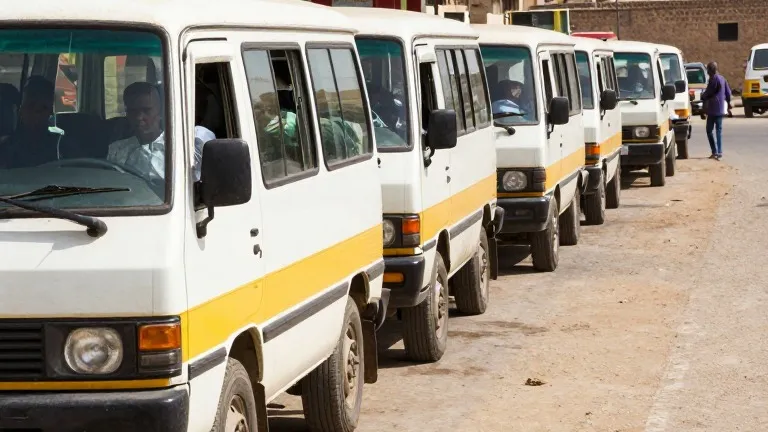
Sudan’s Transport Chambers Union, the body that regulates public and private transport, implemented fare increases this month to offset rising operating costs. Intercity bus fares jumped by 40%, while minibus fares rose by 30%. The adjustment follows a steep climb in fuel prices across the country, where a gallon of petrol now costs 35,000 Sudanese pounds in Port Sudan and 40,000 pounds in Gazira State.
The financial strain on drivers has been building since the war began on April 15, 2023. In Port Sudan, Azhari Mohamed, a 60-year-old minibus driver, consumes 11 litres of petrol daily, a cost of approximately 105,000 Sudanese pounds. Due to scarcity, he now spends one day in three waiting in line, sometimes for more than five hours. After covering fuel expenses, Mohamed retains roughly 50,000 Sudanese pounds per day to support his family. He noted, "We just need fuel to be available so we can work."
Passengers are absorbing the higher costs through reduced travel or increased expenses. Aziza Ibrahim, a 38-year-old cleaner in Port Sudan, has cut her work schedule to three days a week. Her daily round trip to work now costs 11,000 Sudanese pounds, nearly half of her 400,000-pounds monthly salary. She often borrows money to reach her job and repays it upon receiving her paycheck.
The domestic supply crisis stems from the conflict between the Sudanese Armed Forces and the Rapid Support Forces. Attacks on the Balila oil field disrupted supplies to the Khartoum refinery, which previously satisfied about 60% of the nation’s demand for petrol and liquefied petroleum gas. The Ministry of Energy and Petroleum estimated war-related losses at $20 billion last year, while the United Nations Development Programme reported that average incomes have fallen to levels last seen in the 1990s.
Import regulations have compounded the shortage. Economic analyst Sidi Ohaj stated that importers must deposit 200kg of gold in the Central Bank and possess fuel storage facilities. Many failed to comply and exited the market, reducing supply relative to demand. Ohaj urged the government to ease import procedures, noting that global energy markets remain disrupted by the war between the United States and Iran.
The cost increases have also affected commercial logistics. Ahmed al-Haj, a trader in Omdurman, reported that the cost of moving a tonne of goods has risen by 30% to 50%. Local delivery fees in Omdurman have doubled from 5,000 Sudanese pounds to between 10,000 and 12,000 pounds. As a result, transport workers are making fewer trips, and goods are accumulating at traders' premises.
The next phase of the crisis depends on the government's ability to adjust import rules and stabilize the refinery. For now, the higher fares and fuel costs remain fixed in the daily operations of drivers, cleaners, and merchants across Sudan.
Source: Al Jazeera
More Business · World news · Watch Your Wallet · Report a business · Got a Story?