Nvidia CEO’s Viral Duck Demo Pushes Robot Preorders Past 20,000 Ahead of Holidays
A lighthearted product demonstration at a tech conference has suddenly turned a small robotics startup’s open source device into a potential holiday season blockbuster.
By Madison Morris ·
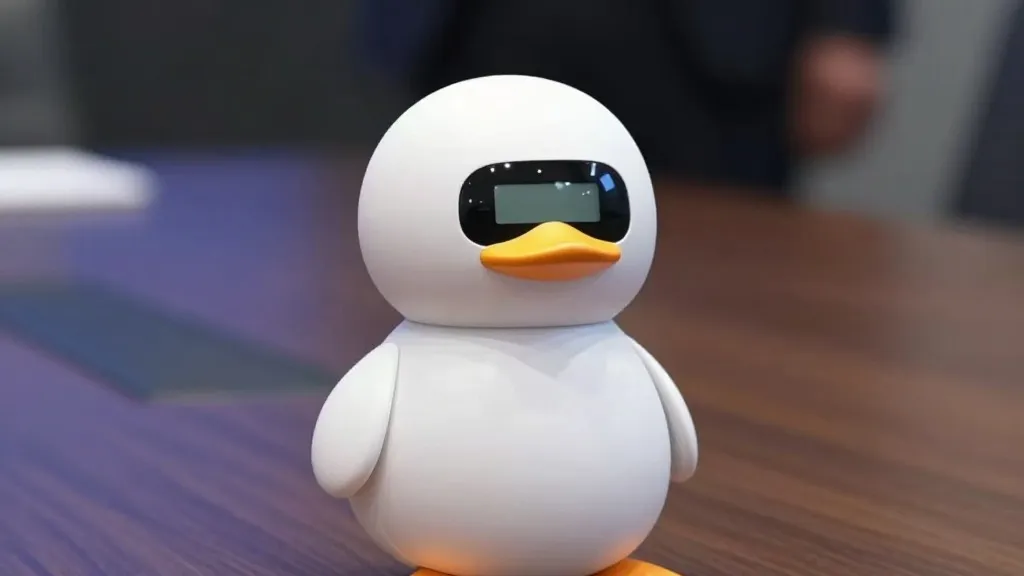
More than 20,000 preorders for a small, waddling robot were secured within a single day, a surge that has industry watchers questioning whether a quirky tech demo has accidentally birthed the year’s most anticipated holiday gift. The rapid accumulation of orders follows a video that went viral earlier this week, showing Nvidia chief executive Jensen Huang interacting with a group of these devices during a keynote address. The footage captured the robots performing simple, charming movements, a stark contrast to the often serious and data-heavy presentations that typically dominate such events. This unexpected popularity suggests that the market may be ready for a shift toward more accessible and playful artificial intelligence hardware.
The timeline of this sudden rise to prominence is remarkably compressed. The narrative began at the GTC Berlin conference, where the company held its keynote. During the presentation, Huang played with the robots, which were shown sitting, standing, and performing somersaults on voice commands. The devices also emitted sounds reminiscent of the droid R2-D2 from the Star Wars franchise, adding to their appeal. By the following day, the momentum was undeniable. Clem Delangue of Hugging Face confirmed via social media that preorders had crossed the 20,000-unit mark. This speed of adoption is notable, especially considering the product is a niche robotics device rather than a mainstream consumer electronic like a smartphone or laptop.
The commercial implications of this trend are becoming clearer as delivery dates approach. The manufacturers expect to have these units in customers' hands in time for the Christmas holiday season. Delangue has suggested that these robots could potentially become the best-selling robotic device of the year. He noted that the appeal is not limited to children, as promotional materials feature adults engaging with the devices as well. This broad demographic reach indicates that the product is positioning itself as a general-interest gadget rather than a specialized toy. If the delivery schedule holds, retailers and logistics providers may find themselves managing an unexpected surge in demand for a product that was not widely known until last week.
Understanding the corporate structure behind this viral hit requires looking at recent acquisitions in the tech sector. The Microducks are open source devices originally produced by Pollen Robotics. That company was acquired by Hugging Face in 2025. Subsequently, Nvidia purchased Hugging Face in September of this year. Therefore, the Microducks are now technically an Nvidia product, though they retain their branding and open source nature. This is the second robot from the Hugging Face portfolio, following the Reachy Mini, which also garnered attention for its design. The chain of acquisitions means that the GPU giant has a direct stake in the success of this consumer hardware, adding another dimension to its hardware strategy beyond its core graphics processing units.
The technology powering these devices is rooted in Nvidia’s own infrastructure. The robots were trained using the company’s technology stack, which involves simulations to teach them basic behaviors. These pre-programmed tricks, such as walking, sitting, and standing, are included when the units ship to buyers. However, the open source nature of the device allows for further customization. Pollen Robotics states that owners can train their specific robots to perform new tricks. These custom movements can then be shared with the broader community of users. This model encourages a level of interaction and modification that is less common in traditional consumer electronics, where the user experience is usually fixed at the point of purchase.
The timing of this viral moment has led some observers to view it as a necessary diversion in the tech industry. Earlier this week, the artificial intelligence sector faced scrutiny as AI involvement was linked to a series of cyberattacks. The narrative around the technology had taken on a more serious, and arguably frightening, tone. In that context, the image of a CEO playing with cute, rubber-footed robots offered a different perspective. It highlighted that the technology, while capable of complex tasks and potential risks, can also be designed for fun and simplicity. The viral video served as a reminder that consumer engagement with AI does not always have to be complex or intimidating.
As the holiday season approaches, the success of the Microducks will be a key indicator of consumer appetite for physical AI devices. The 20,000 preorders are a strong start, but sustained sales will depend on the quality of the delivery experience and the ease with which users can integrate the robots into their daily lives. The fact that adults are a primary target audience suggests that the product may find a niche in offices and homes as a conversational piece or a simple interactive companion. The open source aspect may also drive a secondary market of tutorials and community guides, further extending the product’s lifecycle beyond the initial holiday purchase.
The situation raises questions about how viral marketing can impact hardware sales in the age of social media. A single keynote performance can now generate enough buzz to secure tens of thousands of orders in 24 hours. This level of immediacy in consumer response is a shift from previous years, where product adoption was a slower, more gradual process. For Nvidia, this success provides a tangible example of how its technology can be applied to consumer products, potentially opening new revenue streams. For the robotics industry, it is a proof of concept that cute and simple can be a viable business model in a market often dominated by complex and expensive industrial machines.
Looking ahead, the focus will shift from preorders to actual deliveries. Consumers will be testing the limits of the robots’ capabilities, particularly the custom training features. The community aspect, where users share new tricks, will likely play a significant role in maintaining interest after the initial holiday rush. If the Microducks live up to the hype generated by the viral video, they may set a new standard for how tech companies launch consumer-facing AI products. The experience will be closely watched by competitors and investors alike, as it represents a successful intersection of corporate branding, open source development, and mass consumer appeal.
Ultimately, the Microducks story is one of unexpected success driven by simplicity and charm. In an industry often preoccupied with the next breakthrough in processing power or model size, this device has captured attention by being approachable and fun. The rapid accumulation of preorders suggests that there is a significant, perhaps underserved, market for accessible AI hardware. As the robots arrive in homes across New York and New Jersey, and beyond, their performance will determine whether this is a fleeting viral moment or the start of a new trend in consumer robotics.
Source: TechCrunch · original report published