NHTSA Drafts Cyan Light Standard
Federal regulators propose a uniform blue-green marker to identify active autonomous driving systems.
By Hugo Cook ·
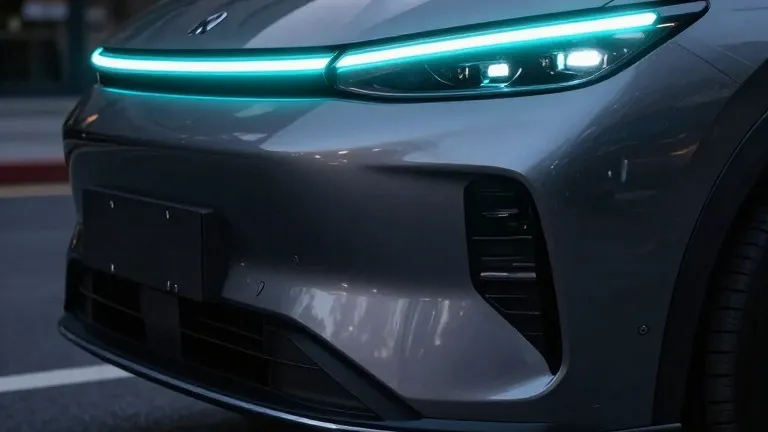
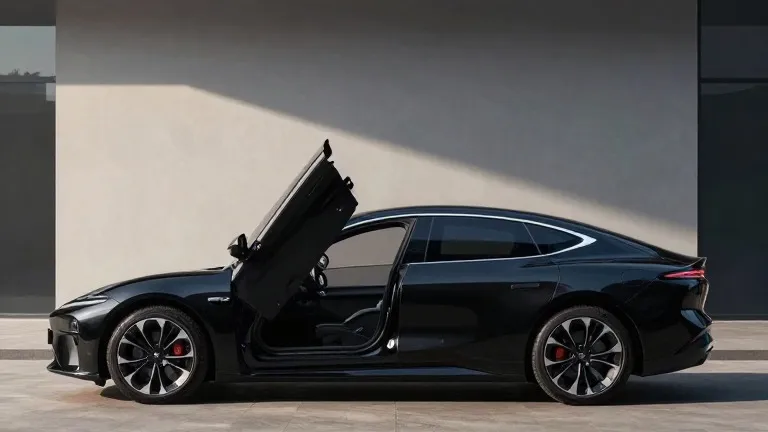
The National Highway Traffic Safety Administration has released proposed amendments to Federal Motor Vehicle Safety Standard No. 108. The draft introduces a mandatory framework for cyan marker lamps on autonomous vehicles. The agency aims to standardize how driverless cars communicate their status to law enforcement and other road users.
NHTSA notes that current vehicle lighting relies on red, amber, and white colors for braking, signals, and headlights. Cyan would occupy a distinct visual space to indicate that an automated driving system is in control. The proposal makes these lights optional for manufacturers but sets federal requirements for their color, brightness, and placement.
The rewrite targets the regulatory burden on vehicle designs that lack human drivers. NHTSA proposes removing requirements for physical hazard switches, manual beam shifters, and interior turn levers. The agency is also considering dropping rules regarding the vertical alignment of high-beam and low-beam lights.
To support modern hardware, the draft updates the 12.8-volt testing standard. This change allows manufacturers to integrate LED systems without facing administrative hurdles. The move aligns with a wider Department of Transportation push to accelerate autonomous vehicle deployment.
Mercedes-Benz previously received state-level approval for turquoise lights on its Level 3 Drive Pilot vehicles. The automaker later shifted to a Level 2++ system. NHTSA now seeks a national standard that companies like Waymo, Nuro, and Zoox can adopt uniformly.
Existing rules remain in force while the proposal is under review. Last month, NHTSA opened an audit query into the Tesla Cybercab. The agency is examining the technical data Tesla used to certify the vehicle. The review focuses on the absence of sideview mirrors, pedals, and a steering wheel, which current federal standards require.
The proposal is now open for public comment before becoming final. If adopted, it would provide the first federal lighting standard specifically for vehicles operating without a human driver.
Source: The Verge
More Business · Tech news · Watch Your Wallet · Report a business · Got a Story?