Midterm stakes: How Congress could reshape corporate fortunes
Defense contracts, Medicaid funding, and data center regulations face potential shifts as voters head to the polls.
By Madison Morris ·
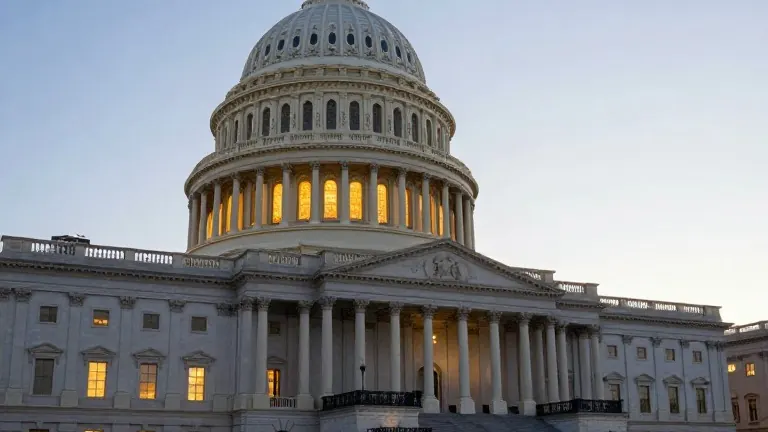
Washington politics are becoming a core variable for major U.S. corporations. The upcoming midterm election could shift leverage between the White House and Congress, directly impacting specific sectors. Companies in defense, healthcare, banking, and technology rely heavily on federal policy to maintain their business models. A change in congressional control would alter the rules of engagement for these industries.
The path to this moment involves a series of recent legislative and regulatory moves. In October, Democratic lawmakers began investigating corporate ties to the current administration. Senator Richard Blumenthal sought records from donors including Cisco and Salesforce regarding a White House ballroom project. Representative Jamie Raskin is examining tariff exclusions linked to Apple. These probes have already increased scrutiny on executives. The Senate also failed to advance the Clarity Act in September, a key bill for cryptocurrency regulation. This failure caused shares of Coinbase and Circle to drop by as much as 11%.
Looking ahead, the election results will determine who holds the gavel in committee rooms. A Democratic victory would provide subpoena power and the ability to compel executive testimony. This shift would likely increase pressure on companies like Lockheed Martin, which derives about 70% of its sales from the U.S. government. The White House has requested $1.5 trillion for national defense in fiscal 2027. It also seeks an $87.6 billion supplemental appropriation for fiscal 2026, largely for operations related to Iran. A split government could challenge some of these spending priorities while potentially increasing aid to Ukraine.
Healthcare stocks face distinct financial pressures. The One Big Beautiful Bill, signed in 2025, is projected to reduce federal Medicaid spending by $911 billion through 2034. Molina Healthcare reported that Medicaid accounts for 75% of its 2025 premium revenue. The company generated $32.2 billion from this source. New work requirements for Medicaid enrollees are scheduled to take effect on January 1, or earlier in some states. A Democratic-controlled chamber could use budget negotiations to delay or modify these cuts. However, they could not repeal the law on their own.
The banking sector awaits clarity on capital requirements. Federal regulators propose a capital overhaul that would cut requirements for the largest banks by roughly 4.8%. This change could free up billions of dollars for lending. Senate control will influence the appointment of future federal regulators. Congressional committees also maintain the power to pressure regulators through hearings. Analysts suggest that the regulatory level is where the most impactful changes for banks will occur.
Artificial intelligence infrastructure presents a complex political challenge. The White House treats rapid data center construction as a national security priority. Morgan Stanley projects that hyperscalers like Microsoft and Amazon will spend more than $1 trillion on capital projects in 2027. This buildout faces growing public opposition. A CNBC survey from October found that 63% of registered voters oppose having a data center within 10 miles of their home. The House voted 417-3 in September to require state regulators to consider making large data centers cover additional electricity infrastructure costs. The measure stalled in the Senate on a procedural vote of 57-43.
The outcome will determine which party manages the friction between tech development and local concerns. Democratic gains could impose more grid upgrade costs on developers. These costs would raise project budgets just as power access constrains new construction. State regulators and local governments will still decide where projects connect to the grid. The election will set the federal framework, but local decisions will dictate the pace of deployment.
Investors are preparing for a fragmented policy environment. Morgan Stanley analysts noted that historical patterns of stock performance under divided government may not hold in this cycle. Ariana Salvatore, head of U.S. public policy research at Morgan Stanley, stated that the current blueprint does not hold up this time around. She remains constructive on the U.S. equity market. Jeff Buchbinder, chief equity strategist at LPL Financial, said there are policy changes that might be market moving for certain segments. The market is watching for clarity on specific rules rather than broad ideological shifts.
Source: CNBC
More Business · Watch Your Wallet · Report a business · Got a Story?