Casco Bay Algae Bloom Cost Farmers 20% of Oyster Crop
While the Karenia mikimotoi bloom has cleared, harvesters in Harpswell face years of recovery and immediate income losses.
By Hugo Cook ·
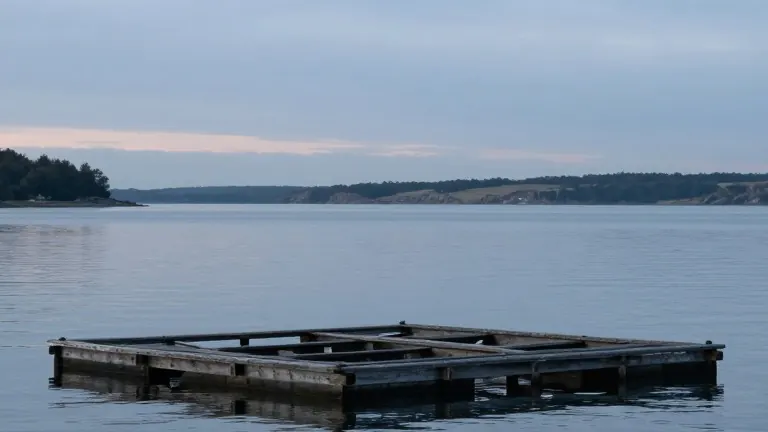
Kat Lipp, general manager of Mere Point Oyster Company, estimated that her farm lost approximately 20% of its oyster inventory during the September algae bloom in Casco Bay.
The event, driven by the toxic plankton Karenia mikimotoi, peaked in mid-September before fading from the waters. Maine’s Department of Marine Resources confirmed the bloom extended from Casco Bay south into New Hampshire and Massachusetts. Although the plankton is not dangerous to humans, its toxicity and the oxygen depletion it caused suffocated various marine species.
Harpswell clam digger David Wilson, who chairs the town’s Marine Resources Committee, reported that larger quahogs, or hard clams, survived the event in Long Cove and Middle Bay. Younger clams and seed clams in those areas appear to have been wiped out. Wilson stated that populations may take as many as seven years to rebuild. He also noted that surviving clams might not endure the winter if they failed to build sufficient fat stores before the cold months.
Harpswell Harbormaster Darcie Couture reported on Oct. 9 that visible signs of the bloom had disappeared, even offshore. A large storm that tracked up the East Coast in the final week of September was feared to push offshore algae back into Maine’s bays, but it stayed away from land and had minimal impact on the bay.
Impacts on aquaculture were mixed. Snow Island Oysters, located on Harpswell Sound near Orr’s Island, reported no unusual die-off. Farm manager Tait Nygaard speculated that the farm’s location closer to the open ocean provided a safer environment than areas farther up the bay. In contrast, Seth White, an oyster farmer near Little Birch Island, found that while his oysters seemed okay, his urchin crop was hit hard. He discovered many dead urchins in mid-September.
White, who received his urchin seed through a University of Maine grant, noted that urchin seed costs 40 times as much as oyster seed. Because this was his first attempt at growing urchins, he expected them to be ready for sale next season. Now, he anticipates a multi-year wait before determining if urchins are an economically viable crop for his farm. He heard that a single other urchin farm in Portland survived the bloom.
The immediate financial toll is also affecting workers. Lipp noted that farms paused harvesting and handling schedules to reduce stress on shellfish, which cut hours for employees. By the end of September, White knew of at least a dozen people who had no work to do. Lipp emphasized that individual harvesters and farmers are bearing the brunt of the economic loss rather than large corporate entities.
It will take months to determine the full impact on workers, and harvesters must wait until spring to assess whether nutrient stress from the bloom leads to further losses. For now, the waters are clear, but the economic and biological recovery remains a long process for the local industry.
Source: The Forecaster
More Business · Watch Your Wallet · Report a business · Got a Story?