Lula and Bolsonaro Fight for Brazil's Future in Final Campaign Push
Two Brazilian presidential rivals held massive rallies on Saturday as polls show the Sunday runoff election is statistically tied.
By Hugo Cook ·
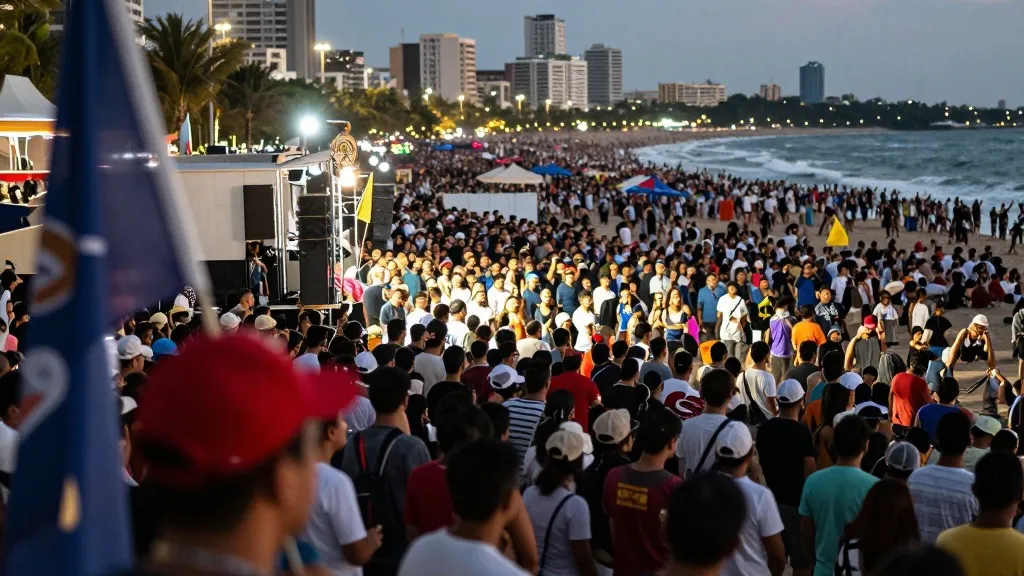
Luiz Inacio Lula da Silva and Flavio Bolsonaro concluded a grueling campaign on Saturday by mobilizing thousands of supporters for final rallies ahead of Sunday's decisive runoff. The two rivals are locked in a battle for Brazil's presidency, with the outcome poised to determine whether the country maintains its current left-leaning trajectory or aligns with a broader regional shift toward the right. This final day of campaigning marked the end of a bitter contest that has highlighted deep fissures in the nation's political landscape.
The statistical picture remains razor thin. Flavio Bolsonaro, a senator and the son of former President Jair Bolsonaro, secured 47 percent of the vote in the first round, holding a slight edge over Lula's 45 percent. Recent data suggests the race is effectively a coin flip. A CNT/MDA poll released on Saturday placed Bolsonaro at 46.3 percent against Lula's 45 percent, a margin of only 1.3 points. This follows a similar result from a week earlier, when the same polling firm showed Bolsonaro leading 46.8 percent to 45.9 percent. With a margin of error of 2.2 percentage points, the numbers indicate that either candidate could claim victory.
Lula, who is 80 years old, sought a fourth non-consecutive term by addressing hundreds of people from a campaign truck on Copacabana Beach in Rio de Janeiro. Wearing a red hat and waving a Brazilian flag, he contrasted his own patriotism with his opponent's foreign ties. He specifically referenced the relationship between Flavio Bolsonaro and US President Donald Trump, stating that the public must choose between someone who kisses the national flag and someone who kisses the American flag.
On the other side of the country, in the southeastern state of Minas Gerais, Bolsonaro's camp gathered hundreds of motorcyclists wearing yellow national football shirts. The atmosphere was energetic, with supporters emphasizing a return to traditional values. Ebert Dorigo, a motorcyclist participating in the event, told AFP that Lula's Workers' Party had fostered a dependence on state welfare. He argued that the country needs a new direction because current policies have led some citizens to believe that improvement comes from government support rather than personal effort.
The stakes of this election extend beyond simple partisan preference. The campaign has exposed profound disagreements regarding economic policy, crime rates, and the future role of the state. Bolsonaro has pledged to cut government spending and address crime by constructing hundreds of thousands of new prison places. His father, who served as president from 2019 to 2022, is currently serving a 27-year prison sentence for attempting a coup after losing the 2022 election to Lula.
Despite the intensity of the ground game, the candidates adopted a slightly calmer tone during their final debate on Friday. They continued to trade accusations over economic management and past records, but the exchanges were less volatile than earlier in the campaign. For many undecided voters, the choice feels less like a preference and more like a difficult necessity.
Gabriela Ribeiro Viana, an event organizer, captured this sentiment in an interview with AFP. She noted that while another candidate might have been preferable, voters are currently stuck choosing between what she described as the horrible option and the lesser evil. This sentiment suggests that the final vote may be driven as much by rejection of one candidate as it is by enthusiasm for the other.
Source: Al Jazeera
More Politics · World news · Report a business · Got a Story?