Japan establishes National Disaster Management Agency to coordinate response to major quakes and eruptions
The new body of 350 staff will oversee preparedness and reconstruction, aiming to fix gaps exposed by the 2011 disaster and recent earthquakes.
By Hugo Cook ·
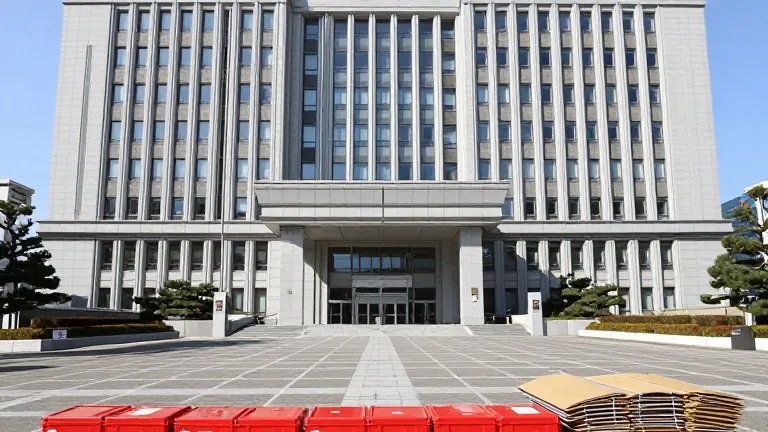
Tokyo officials opened a new national agency on Monday to centralize the country's response to natural disasters.
The National Disaster Management Agency will employ more than 350 workers to manage preparedness, emergency response, and reconstruction. Prime Minister Sanae Takaichi will oversee the new entity, which reports to Reconstruction Minister Goshi Hosono. The government created the body to address concerns about readiness for major seismic events, including a potential megaquake along the Pacific coast or in Tokyo, as well as an eruption of Mount Fuji.
Hosono stated that the agency will serve as the command center for disaster response. He said the goal is to strengthen preparedness to protect lives and property and to make Japan the most prepared nation in the world. The minister emphasized that the new structure is not a reaction to a specific impending calamity but a fix for a long-standing gap in the government's architecture. Japan is located on the Pacific ring of fire, making it one of the most disaster-prone regions on Earth, yet it had previously relied on temporary teams from different ministries rather than a dedicated central authority.
On Monday, Hosono issued emergency requests to municipalities and citizens to assess their safety. He urged residents to check the earthquake resistance of their homes, secure furniture, review evacuation routes, and stockpile water and portable toilets for at least three days. Hosono, who previously managed the Fukushima nuclear crisis, said he wants to apply his experience from the 2011 disaster to the new agency. He told the public to think for themselves and take action.
Government data reveals gaps in current disaster training and planning. Hosono noted that less than half of municipal officials have received disaster management training in the past five years. Only 15% of Japanese municipalities have evacuation contingency plans for elderly or disabled residents who require assistance. Previously, disaster response relied on reactive units where officials from various departments gathered to form temporary teams without a cross-departmental command center.
Experts warn that major earthquakes are possible in the coming decades, though specific timing and locations cannot be predicted. The government's primary concern is a megaquake linked to the Nankai Trough, an undersea trench off southeastern Japan. Government assessments estimate such an event could cause 298,000 deaths, force 6.5 million people to evacuate, and destroy 2.35 million homes. Hosono said that if this scenario plays out, the nation's future will be at stake.
Other high-risk scenarios include a megaquake from two troughs off Japan's northern coasts, which could kill nearly 200,000 people. A major earthquake striking metropolitan Tokyo is estimated to cause 18,000 deaths, displace 4.1 million people, and destroy 400,000 homes. A Mount Fuji eruption could impact 790,000 people and disrupt transportation, power lines, and key infrastructure.
The new agency also aims to improve conditions in evacuation centers, which have faced criticism for lacking privacy, bedding, clean toilets, and hot food. The government plans to provide clean portable toilets, kitchens capable of serving hot meals, hot bath facilities, and cardboard beds. These improvements address harsh environments that experts have linked to health problems and deaths during past disasters.
The 2011 magnitude 9 earthquake and tsunami in northern Japan killed nearly 19,800 people, including 3,810 who died due to difficult living conditions afterward. A reconstruction agency was established to aid northern Japan's recovery, including the Fukushima nuclear plant decontamination, but no centralized disaster agency existed. In July, a magnitude 7.1 earthquake in Kumamoto prefecture killed 38 people and damaged more than 69,000 homes. During that event, many residents stayed in vehicles or parking lots because gymnasiums and community centers lacked air conditioning in the heat.
Source: Stamford Advocate