Breaking: Election Day is here! Make your selections for the 2026 midterms
Voters across the nation are casting ballots to decide which party controls Congress, with 435 House seats, 35 Senate seats, and 36 governorships on the line.
By Madison Morris ·
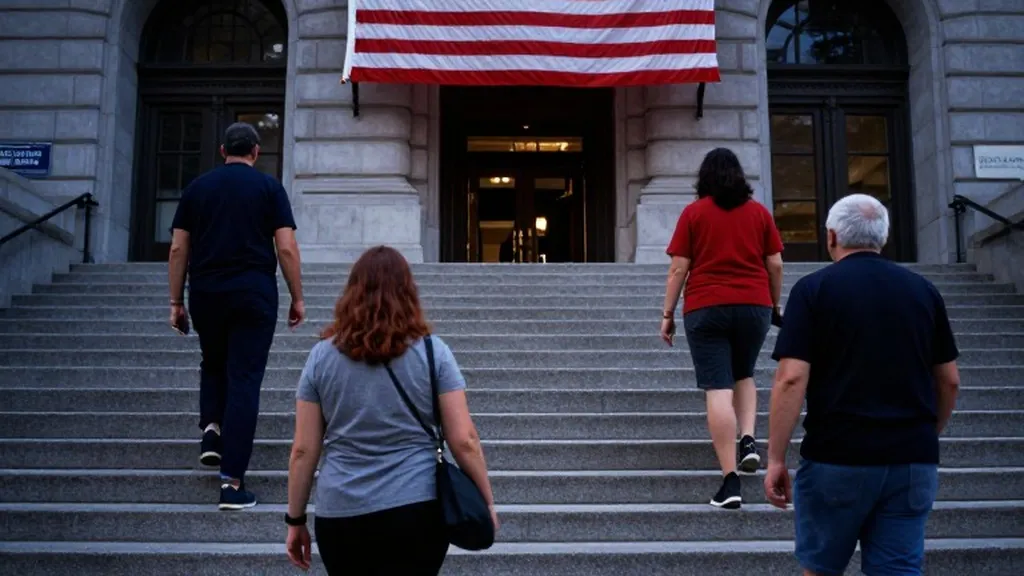
Election Day has arrived for the 2026 midterm elections, a decisive contest that will determine which party controls the United States Congress for the final two years of President Donald Trump's second term. According to Ballotpedia and USA.gov, all 435 seats in the U.S. House of Representatives are up for grabs, along with 35 of the 100 seats in the U.S. Senate. Additionally, voters are choosing governors in 36 states. The outcome will shape the legislative agenda for the remainder of the current administration and set the stage for the 2028 presidential cycle.
The stakes in the House race are particularly high because the chamber is currently split. Republicans currently hold 218 seats, while Democrats hold 214, with one independent and several vacancies. According to Ballotpedia, Democrats need a net gain of three districts to secure a majority, whereas Republicans can lose no more than two seats to maintain control. A significant number of incumbents have stepped aside, with 60 House members not running again. Ballotpedia identifies 46 battleground districts, with 25 held by Democrats and 21 held by Republicans. This close margin means that turnout in these competitive areas will be the deciding factor for the next two years of legislative power.
In the Senate, 35 seats are on the ballot, including 33 regular elections and two special elections for the remaining terms of Marco Rubio in Florida and JD Vance in Ohio. Republicans hold 53 seats, Democrats hold 45, and two independents caucus with the Democrats. According to Ballotpedia, Democrats need a net gain of four seats to take the majority, while Republicans can afford to lose only two. Eleven senators are not seeking re-election, creating open seats in several key states. The winners will begin their six-year terms on January 3, 2027. This chamber is where many of the most contentious national issues will be debated, making the balance of power critical for both parties.
Governor races are also a major focus, with 36 governorships up for election. Heading into the day, Republicans hold 26 governor's offices and Democrats hold 24. According to Ballotpedia, Democrats would need a net gain of two governorships to achieve a nationwide majority, a position Republicans have held since 2010. Nineteen of these races do not feature an incumbent, either due to term limits or voluntary retirements. The AP notes that the election serves as a referendum on the president's second term, with voters struggling with high prices and expressing anger over an unpopular war with Iran. This context adds a layer of national significance to local and state-level races.
Polling data provides insight into the current mood of the electorate. According to AP-NORC polling, 35% of U.S. adults approve of President Trump's job performance, while only 25% approve of his handling of the economy. About seven in 10 respondents say the country is heading in the wrong direction, with most blaming the president for high prices. Despite these numbers, more than 57 million people had already voted as of Monday, surpassing the early vote totals from four years ago in many closely watched states. This high level of early participation suggests that the final outcome will depend heavily on who can mobilize their base on Tuesday.
The Associated Press reports that Republicans were bracing to lose the House while fighting to hold the Senate. The AP notes that one or two seats could tip the balance in either chamber. Democrats, meanwhile, are described as cautiously optimistic. President Trump held dozens of rallies in the final week, ending Sunday in Salina, Kansas, where he told the crowd, "I really want you to pretend I'm on the ballot." His schedule included stops in Mississippi, South Carolina, and Texas. However, many Republican candidates kept a distance from the president during the final days of the campaign, a strategy that reflects the complex dynamics of the midterm environment.
Financial resources have played a significant role in this election, which is likely to be the most expensive in history. According to the AP, Republican committees outraised and outspent their Democratic counterparts, aided by Trump-affiliated groups and Elon Musk. However, at the candidate level, Democrats outraised their opponents. An AP analysis of AdImpact data shows that 88.1% of Republican general election TV ad spending went to states and districts that Trump won in 2024. This targeted spending highlights the strategy of defending existing power bases while challenging opponents in competitive areas.
Quotes from party leaders offer a glimpse into their respective strategies. Joe Gruters, the RNC Chairman, stated, "Everything depends on turnout. If we turn out our voters, we win, and that's what we've been planning for." In contrast, Suzan DelBene, the DCCC Chair and a Representative, said, "The American people are angry. They want change." These statements reflect the broader narrative of the election, with Republicans focusing on mobilization and Democrats emphasizing the desire for a shift in direction. The mood among voters is divided, with some expressing strong support for the president and others citing economic concerns as their primary motivation.
Voter sentiment is mixed, as illustrated by interviews with individuals in key states. Mark Barker of Palm Beach Gardens, Florida, said, "I've just been following Trump the whole time. I really think he's doing an awesome job." On the other hand, James Moore, a 57-year-old librarian in Raleigh, North Carolina, noted, "I'm paying more taxes. I'm paying more for my healthcare. I'm paying more for everything." These personal anecdotes capture the economic anxieties that are driving voter behavior. The AP notes that if Democrats win even one chamber, investigations and possible impeachment proceedings become likely, adding to the sense of high stakes for this election.
The legislative implications of a Democratic victory are significant. House Democratic Leader Hakeem Jeffries would be the first Black speaker of the House and has outlined a 100-day agenda focused on the cost of living and oversight. A strong Democratic night would also boost potential 2028 presidential candidates such as Gavin Newsom, JB Pritzker, and Pete Buttigieg. For Republicans, the challenge is to beat the historical midterm pattern, where a president's party almost always loses seats. While redistricting efforts aimed to secure favorable maps, the AP notes that new districts in Florida and elsewhere may not vote as drawn, introducing an element of uncertainty.
Election administration has been a point of contention leading up to today. According to Reuters, a federal judge on Monday temporarily barred the Trump administration from carrying out a plan to prevent noncitizen voting. Critics argued that the plan risked disenfranchising eligible voters and infringed on states' authority over elections. In California, a judge ordered the administration to stop demanding that election officials segregate ballots cast by people on lists of suspected noncitizens. The U.S. Postal Service added hours, staff, and special lines to ensure that mail ballots are counted on time, addressing logistical concerns in states that rely heavily on mail-in voting.