Antarctic Intermediate Water Salts Rapidly After Sea Ice Collapse
A sharp increase in salinity at mid-depths reverses decades of freshening, altering how the Southern Ocean transports heat and carbon toward the equator.
By Hugo Cook ·
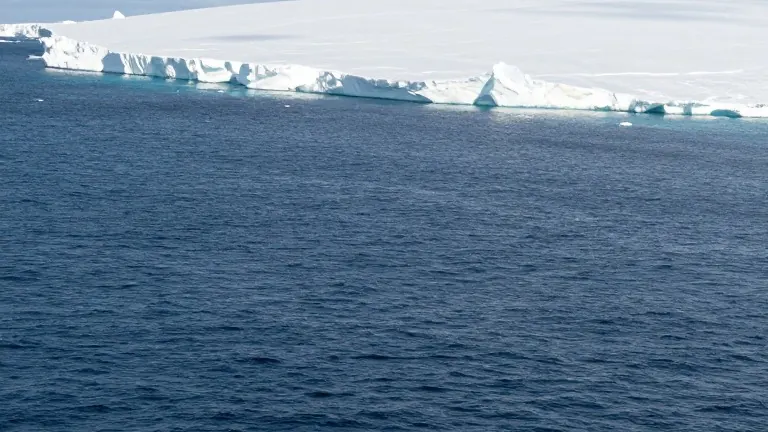
The Southern Ocean has undergone a fundamental shift in its middle depths, a change that may disrupt the global circulation of heat and nutrients. Scientists reported on Wednesday that a vast layer of water encircling Antarctica has become significantly saltier in recent years, reversing a long-term trend toward freshness.
The research, published in a paper on Wednesday, identifies a sharp rise in salinity within Antarctic Intermediate Water. This layer extends from 2,300 to 4,000 feet deep. The observed increase contradicts decades of data showing that this water mass had been gradually becoming less salty. The speed of this reversal mirrors changes typically associated with major climate shifts that take thousands of years, but it is occurring over just a few years.
Bishakhdatta Gayen, a researcher at the University of Melbourne and the Centre for Atmospheric and Oceanic Sciences in Bengaluru, India, noted that the implications reach far beyond the polar region. The Antarctic Intermediate Water spreads northward into the Indian, Pacific, and Atlantic oceans. It carries heat, carbon, oxygen, and nutrients toward the tropics and across the equator. A change in the properties of this water mass therefore affects global ocean dynamics.
The study combined six independent datasets to track changes from 2004 to 2024. The researchers relied on Argo floats, which drift through the ocean to measure water density and salinity at various depths before surfacing to transmit the data. Gayen pointed out that a 2025 study had already detected increasing surface salinity linked to the decline in sea ice.
The driver of this salinity increase is the rapid loss of Antarctic sea ice. Satellite records show that Antarctic sea ice reached its highest extent in 2014. It then dropped to a record low in 2016. The ice has remained well below the 2014 levels since then, reaching another low point in 2023. In that year, the ice area was about 1 million square miles below the 1981 to 2010 average. This loss equates to an area of ice roughly four times the size of Texas disappearing.
As sea ice dwindles, less freshwater is released during the melt season, making the underlying water saltier. Gayen explained that changes to the density, thickness, and salinity of this layer influence how heat moves between the ocean surface and deeper waters. These shifts could affect how the ocean stores and redistributes heat.
Gayen warned that the impacts of these changes are potentially "knocking on your door" within five years. He emphasized the need for more monitoring to track these developing trends.
Source: Ars Technica