38 Parties and a 3.25% Hurdle: The Math Behind Israel's Next Knesset
Voters face a fragmented field where coalition building, not just vote totals, will determine who leads the government.
By Madison Morris ·
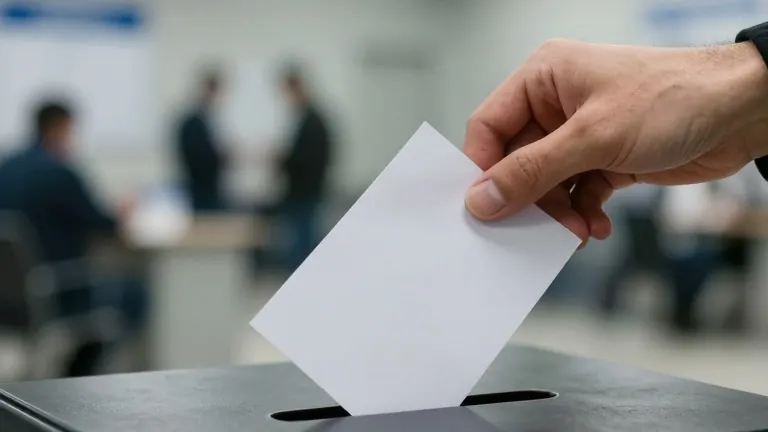
Israel heads into its 26th Knesset election with a parliamentary system that makes ballot selection more complex than a simple choice between two candidates. The entire country functions as a single electoral district, meaning citizens vote for a party rather than a specific representative. This structure creates a scenario where a single vote must secure a party enough support to cross a high bar for legislative entry.
Thirty-eight parties have registered for the upcoming vote. For the majority of these groups, the path to the Knesset is steep. The legal threshold requires a party to receive at least 3.25% of the total national vote. Many registered parties are unlikely to reach this mark, leaving their seats in the legislature uncertain. Even for larger lists, the number of candidates who will actually take seats depends on the final proportional distribution.
The race for the prime ministership presents a distinct challenge for voters seeking a change in leadership. Gadi Eisenkot leads the new Yashar party on the left. On the right, Naftali Bennett remains a figure, though his status is debated among conservatives following his previous coalition with Arab parties. Few other candidates are widely viewed as having a strong chance to replace the current long-serving prime minister.
For right-leaning voters, the strategic calculus often centers on the Likud party. Political analysis suggests that if Likud does not secure a lead or near-lead over Yashar, with the difference covered by smaller aligned parties, the right may lose control of the government. In such an outcome, policies such as civil marriage and changes to Shabbat transit in Jerusalem could advance. There is also a possibility that an Eisenkot-led government might form a coalition with Arab parties.
A Channel 12 survey quoted in a recent Jerusalem Post article indicates that 23% of Israelis consider emigrating if Benjamin Netanyahu secures a fourth term. The report noted that this intention extends to doctors, tech workers, and reservists. However, many right-wing voters remain committed to staying, viewing alignment with the current government as the lesser evil compared to an alternative left-of-center bloc.
Voters who support the right but wish to vote for a party other than Likud face a specific risk. They must ensure that the Likud party receives sufficient votes to maintain its dominant position within the national camp. If smaller right-wing lists outperform Likud, the mathematical center of gravity could shift, potentially giving President Isaac Herzog a mandate to task a left-leaning leader with forming a government. President Herzog holds the technical power to assign the mandate to the figure he believes has the best chance of building a stable coalition.
This presidential role adds a layer of unpredictability to the election. Although the position is largely ceremonial, the authority to choose who attempts to form a government creates a haggling dynamic among parties. Polls provide data on vote share, but they cannot fully account for the post-election negotiations that will determine the final cabinet composition.
The election field includes several smaller right-wing options, such as the Religious Zionist Party, Otzma Yehudit, and Noam L’Yisrael. A new pro-change Haredi Public Party, HaTzibur HaCharedi, is also on the ballot and is drawing support from voters outside the Haredi community. These lists offer voters a way to signal specific policy preferences while still contributing to the broader right-wing bloc.
The outcome will depend on how these smaller parties perform relative to the major contenders. The 3.25% threshold acts as a filter that will eliminate many of the 38 registered groups from the final calculation. The resulting Knesset composition will dictate the bargaining power each faction holds during the coalition formation process.
Source: The Jewish Press