Ukraine's drone campaign grounds Moscow flights for nine hours daily
Daily closures at four major hubs have disrupted travel as Russian aviation authorities trigger safety protocols in response to Ukrainian drone activity.
By Hugo Cook ·
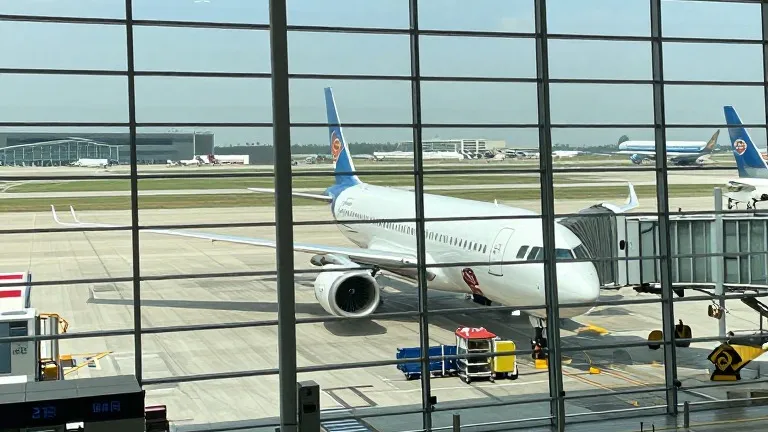
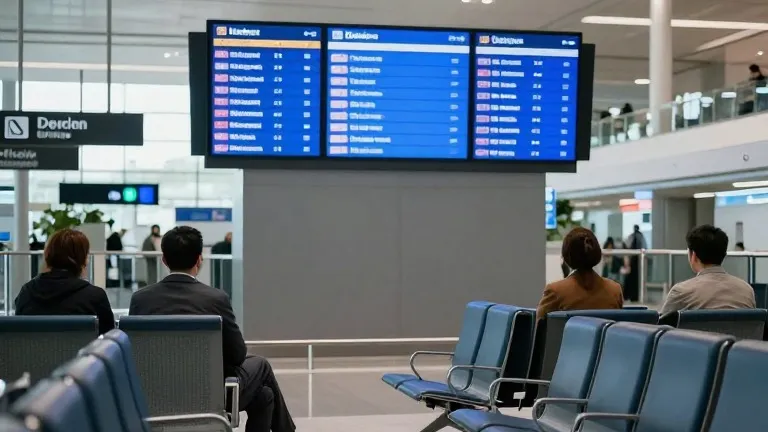
Moscow travelers are facing routine disruptions as Ukrainian drone activity forces local airports to shut down daily. The four main hubs serving the capital, Domodedovo, Sheremetyevo, Zhukovsky, and Vnukovo, suspended operations on nearly every day in October. On several occasions, these closures lasted as long as nine hours, according to data from the independent outlet Agentstvo.
This pattern of interruption aligns with a strategy outlined by President Volodymyr Zelenskyy in early September. He stated that Ukraine intended to make Russian airspace unsafe for commercial flight. Zelenskyy directed his comments at airlines, insurers, and passengers, declaring that Russian airspace would become completely unsafe. The following day, Ukraine sent a formal warning to the International Civil Aviation Organization regarding the changing conditions.
The primary cause of these groundings is a safety measure known as the carpet protocol, administered by Rosaviatsiya, Russia's aviation authority. This procedure mandates an immediate closure of airspace over a region when an aircraft violates borders, weapons are deployed, or unidentified objects appear in the sky. Once triggered, strict limits apply to all air traffic in the affected area.
Oleksandr Laneckij, chief executive of the consultancy Friendly Avia Support, noted that the protocol treats every drone as a military threat. He compared the current situation to the disruptions caused by Yemen's Houthis in Saudi airspace. Laneckij argued that Ukraine's military capabilities significantly exceed those of the Houthis, making the threat more persistent.
Jan Matvejev, a military analyst, said that Ukraine can easily disrupt air traffic around Moscow without fully closing the entire national airspace. He explained that triggering the protocol requires only simple drones that lack warheads or long range. Ukraine's arms industry currently produces hundreds of combat-ready long-range drones daily, providing a steady supply for these operations.
Matvejev contended that Russian air defenses are not fully effective against these small aircraft. He stated that if it were possible to shoot them down consistently, Russian forces would have done so by now. He added that Russia would have deployed more air-defense troops if the personnel were available.
Both experts raised concerns about the safety of civilian flights under the current protocol. Laneckij warned that Russia might lower the threshold for declaring a carpet closure, increasing the risk of incidents similar to the Christmas day crash of an Azerbaijan Airlines flight in 2024. Investigators determined that a Russian air-defense missile, fired to counter drones, struck the aircraft, killing 38 people.
Matvejev noted that little has changed in Russia's air-defense procedures since that crash. While shooting a low-flying drone with a machine gun poses an extremely low risk to nearby aircraft, missiles present a greater danger. He explained that defects in mass production could cause a missile to deviate toward an airliner. He also pointed out that drones weighing dozens of kilograms can cause serious harm through collision alone, without the need for explosives.
The impact on international airlines depends on the military threat, passenger demand, and insurance costs. Laneckij said that if insurers rate the risk as very high, they will likely raise premiums, which would increase ticket prices. Competition in the Russian aviation market has already shrunk as many airlines have ceased operations, increasing demand for seats on remaining foreign carriers. He concluded that whether foreign airlines continue to fly to Russia depends on the price they must pay for the danger they face.
Source: Deutsche Welle