Kavantissa Death Recounts 7,451-Elephant Census and Conflict Toll
A 5,500 kg bull known as Sri Lanka's tallest elephant was put down on October 16 after a leg wound, as official counts show 7,451 wild elephants nationwide in 2024.
By Hugo Cook ·
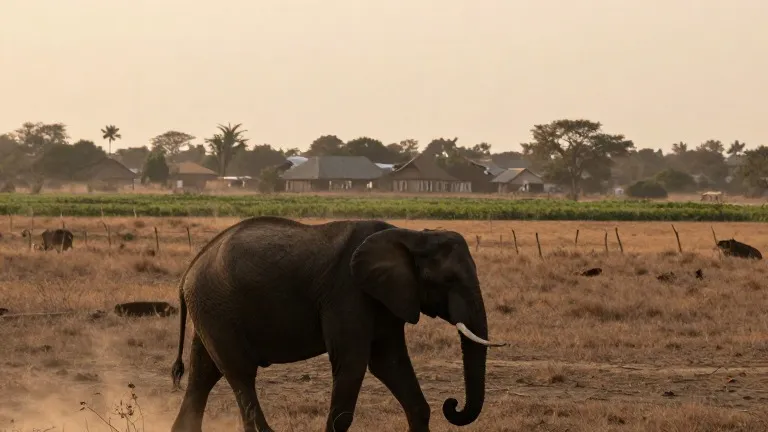
The wild bull elephant called Kavantissa died on October 16, about a month after villagers near Galgamuwa spotted him limping and found a gunshot wound on his right leg. Veterinary surgeons treated the animal but could not save him. Believed to be around 45 years old, he measured roughly 3.3 meters tall and carried about 5,500 kilograms. He was regarded as the tallest living male elephant in Sri Lanka and ranged through the northwest of the country.
Sri Lanka's Department of Wildlife Conservation estimated the wild elephant population at 7,451 animals in 2024. About 70% of those elephants live outside protected areas. Each elephant requires roughly 150 kilograms of green matter daily, a need that draws animals toward farmland. The country holds roughly 10% of the world's Asian elephants on land that makes up about 2% of the subspecies' natural range, which gives Sri Lanka the highest density of the species anywhere.
Official figures kept since 2019 show an average of 370 elephants and 125 people die each year in incidents between the two. Sri Lanka records more elephant deaths annually than any other country and the second highest number of human deaths worldwide from such encounters. Elephants are shot, poisoned, struck by trains, or killed with improvised explosives hidden in food, according to the source material. The Sri Lankan elephant subspecies is listed as endangered on the IUCN Red List and is protected by national law, which carries fines and jail terms for wildlife offences.
Ravi Corea, president of the Sri Lanka Wildlife Conservation Society, attributes the conflict to habitat loss, agricultural expansion, broken elephant corridors, and competition for land. He said crop losses can take away a rural family's food and income, which separates the problem from wildlife conflicts in wealthier countries. Corea said government efforts have not stopped the counts from rising. A national action plan drafted in 2020 provides a starting point, he said, but it requires a wider conservation strategy with enforceable habitat protection.
Forest cover has contracted over recent decades while the rural population grew from 8.25 million in 1960 to 17.8 million in 2020. Farming remains the main source of income in rural areas, so land continues to be cleared for agriculture. Kamal Shashendra, an environmental ethics researcher based in Sri Lanka, said any workable resolution must protect human lives, livelihoods, and elephant populations at once. He said this calls for scientifically informed land-use planning, protected corridors, community-based fencing, effective early-warning systems, and fair compensation for affected families.
Community programs run by non-governmental groups have shown results. Project Orange Elephant in the Wasgamuwa region encourages farmers to grow citrus, which elephants avoid, cutting crop raiding while adding income. Electric fencing protects settlements and farmland. In the same region, the EleFriendly bus service carries schoolchildren through elephant corridors where confrontations had in some cases kept children from walking to class, and it has reduced dangerous encounters along its original route by more than 90%.
Source: Deutsche Welle