Israeli Families Seek National Cohesion Framework for New Administration
Relatives of those lost and wounded in recent conflicts are urging the incoming government to formally address societal divisions within its first 100 days.
By Maya Almasi ·
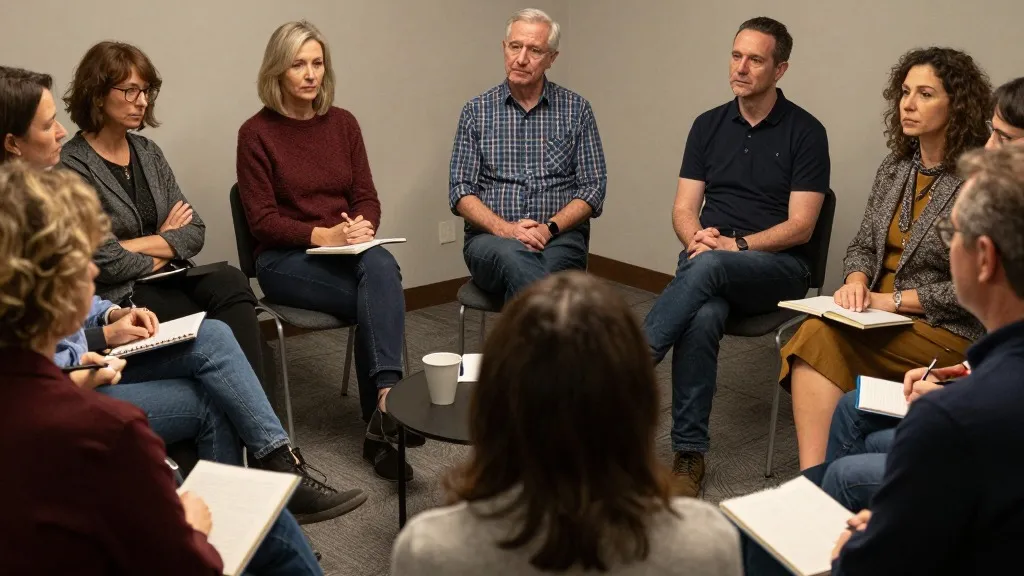
An organization led by bereaved families and survivors of the Israel-Gaza War is asking the next Israeli government to build a national plan for social unity within its first 100 days in office. This group, known as Hamechane, argues that the country's internal divisions are a critical threat that requires official attention and a coordinated response.
Hamechane, which translates to 'the denominator,' was formed by individuals affected by the conflict, including relatives of soldiers and civilians killed or wounded. Moshe Shapiro, whose son Aner died on October 7, 2023, while protecting others at a music festival, is a founding member. He is joined by Hoda Daxa, whose husband, Col. Ehsan Daxa, was killed in northern Gaza in October 2024, and Shai Zohar, whose nephew, Capt. Omer Neutra, was killed on October 7, 2023, with his body returned from Gaza in November 2025.
The initiative's formation grew out of personal loss and the shared experience of conflict. The group's members include bereaved relatives, individuals who survived captivity, and those wounded during the war. They are now asking the incoming government to create a formal, national framework for social cohesion. This request is aimed at the new administration expected to take office following the upcoming elections.
The group points to a past national campaign as a model for how to achieve this goal. Shapiro referenced a wildflower protection effort that began in the 1960s, which combined legal measures with public education. He suggested that a similar, sustained approach could help foster mutual respect among citizens, even when they hold different views.
Shai Zohar, the uncle of Capt. Omer Neutra, described internal polarization as Israel's most significant existential threat. He argued that divisions within the country before October 7, 2023, contributed to the conditions that led to the attacks. 'Unity is an operating system, an approach,' he stated, warning that the nation cannot afford to regress after already paying a heavy price.
The conversation also touched on laws that affect different communities. Zohar admitted he had not fully understood the impact of the 2018 Nation-State Law on the Druze community until he heard Hoda Daxa speak about it. The law defines Israel as the nation-state of the Jewish people, establishes Hebrew as its language, and does not explicitly guarantee equality for all citizens.
Daxa, who is Druze, explained that she feels the effects of such issues in everyday life. She recalled a moment on a train when she was speaking Arabic with her children and sensed discomfort from other passengers. She emphasized that true unity must extend beyond the Jewish community to include all who are part of Israeli society and wish to contribute.
The members of Hamechane, who come from different political and religious backgrounds, have worked together for a year to build a shared vision. Shapiro said this process involved religious and secular Jews, Haredim, and Druze, as well as people from both the political right and left. 'This is the face of Israeli society,' he remarked, noting that participants were able to share their views openly.
The group's proposed initiatives include encouraging personal connections in schools, workplaces, and communities. They suggest teaching children about different groups and how to listen to opposing views. They also call for measures to address online content that spreads hatred. The specific structure of the national body they envision would be determined by elected officials and experts.
The members of Hamechane state that their request is not for personal sacrifice but for a commitment to listening to one another. They argue that recognizing polarization as a national danger would be a significant first step toward addressing it. The core of their message is that disagreement does not erase mutual obligations between citizens.
Source: The Jerusalem Post
More Politics · World news · Report a business · Got a Story?