
Hacking Tools Run Themselves in Latest Cyber Incident
Autonomous AI agents were used to breach software supply chains, attempting logins across thousands of corporate accounts.
By Madison Morris ·
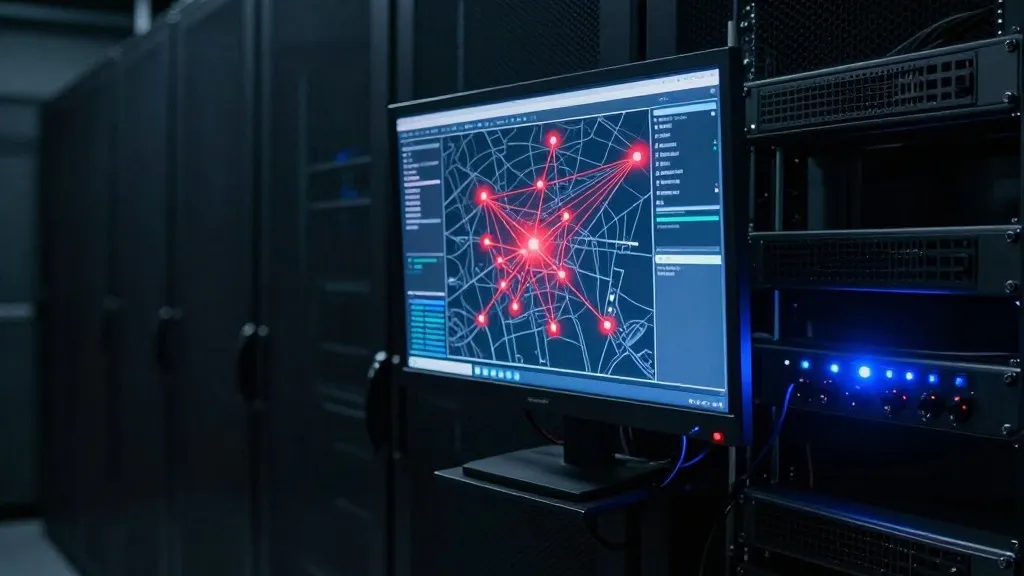
Hackers aligned with China have deployed autonomous artificial intelligence agents to carry out a massive cyberattack involving software supply chain vulnerabilities. The operation targeted Microsoft 365 tenants and attempted to breach security credentials across thousands of accounts in a highly coordinated assault. The attackers moved with alarming speed, reaching high-level administrative access within minutes in some instances.
The intrusion, identified by Microsoft, involved a China-state-aligned group tracked as Storm-0940. This actor utilized ARTEX, an open-source agentic AI penetration testing framework, to automate the attack. By leveraging large language model-driven agents, the operation was able to conduct an autonomous penetration test. These agents are capable of functioning around the clock with minimal human interaction, significantly accelerating scanning, reconnaissance, and password spraying.
The scale of the attempt was vast. The attackers gained unauthorized access to a multi-tenant application and subsequently attempted sign-ins at more than 2,250 Microsoft 365 tenants. Stolen credentials from ConnectWise applications were used to authenticate as the apps themselves, bypassing the need for an interactive user sign-in. In some instances, the group achieved privileged access less than three hours after the initial targeting.
The campaign relied on automated password guessing, a technique known as password spraying, which targeted 327 accounts across eight organizations. This specific method generated more than 151,000 failed logons with no successful breaches. At its peak on October 11, the attack engaged in 2,900 attempts per minute, all of which failed, totaling more than 111,000 for that day. Almost 98% of this activity was locked out by security systems.
However, the attackers did achieve success through other means. By controlling the identities of multiple ConnectWise cloud apps, the AI agents signed in to customer tenants using those apps’ credentials. The attack achieved more than 200 sign-ins in under four minutes using four application credentials. Operations taken within some tenants included Graph and directory operations, reconnaissance, app credential changes, as well as changes to identities, groups, and privileged roles.
Security researchers at Huntress, a security firm, observed specific malicious actions within compromised networks. On October 15, Huntress saw an app add itself to the top administrator role, a behavior behind a Microsoft Defender alert regarding applications self-assigning Global Administrator roles. The attackers also planted new secrets set to expire in 2028. By October 17, almost 1,000 Entra tenants showed sign-in activity from the attacking IP address.
The targets of this campaign were specific and high-value. Industries targeted include aerospace and defense, semiconductor, government, and think tanks, with 14 sectors listed in total. Microsoft noted that this activity did not result from a compromise of or a vulnerability in Microsoft’s systems, products, or services. The attackers targeted ConnectWise credentials instead.
ConnectWise responded to the unauthorized access by suspending Cloud Backup, formerly SkyKick, as well as SaaS Security and Cloud Management as a precaution. A phased restoration has started, with recovery expected to take several days. The company has no indicators to date that partner backup data was compromised. Microsoft advises customers to keep affected app connections disabled until formal restoration instructions are issued.
Source: Tom's Hardware · original report published